It gives a simple online calculation sheet to design the urban drain. This article also discusses the issues with the urban drains
Refresh the page to return to the original values.
Details of the Design
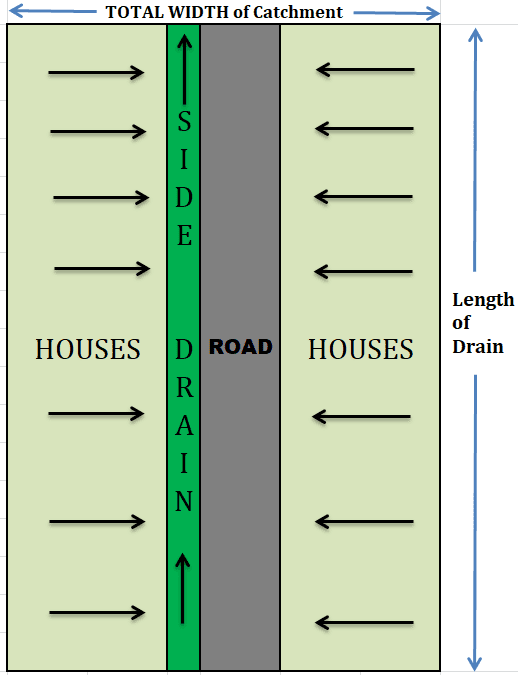
The Length and width of the Catchment is represented by the figure below. This is for One side drain. If both side drains are required then divide the catchment width by 2.
The critical section is calculated from the Excel sheet. Increase the section to attain safety and overboard depth.
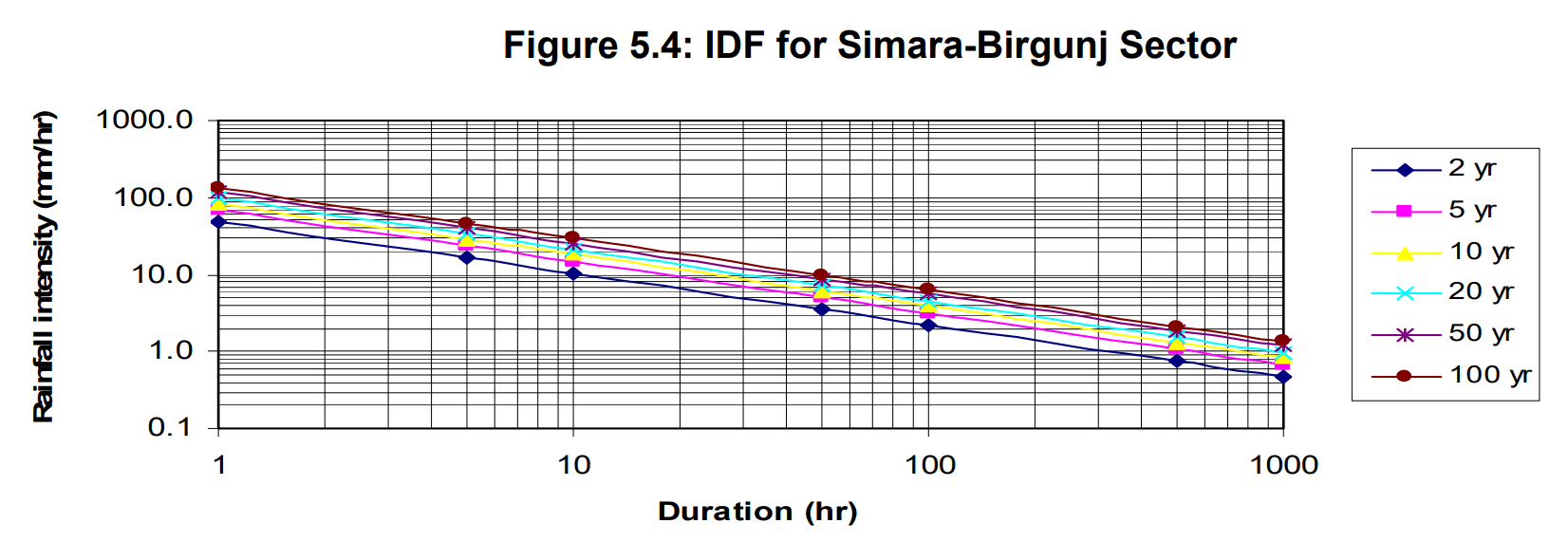
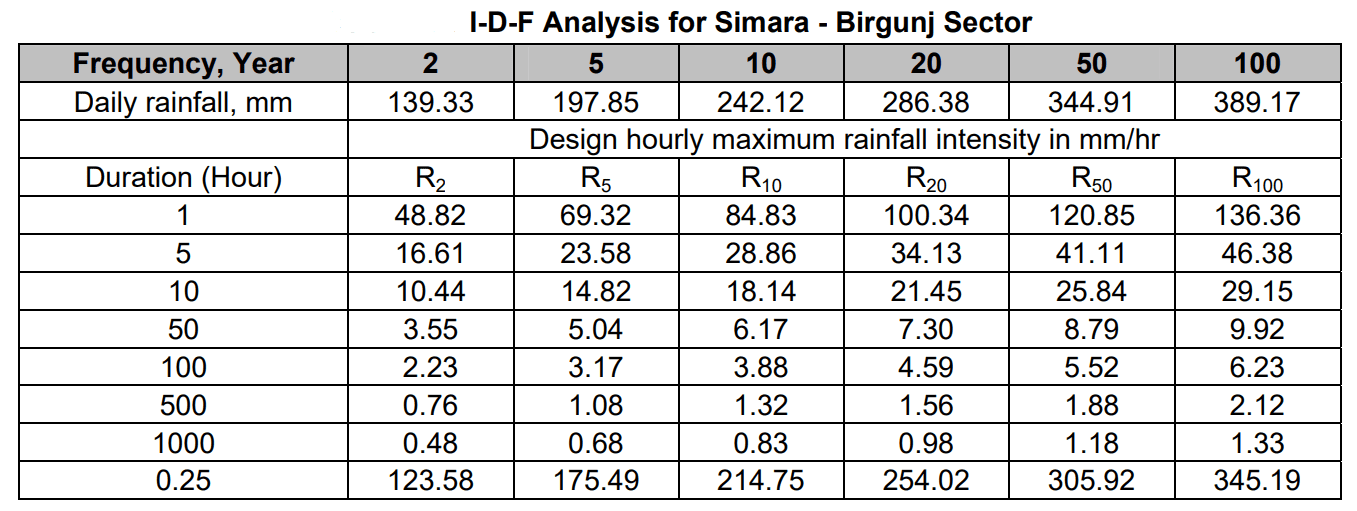
The IDF curve is taken for Birgunj, Nepal for the Typical Design.
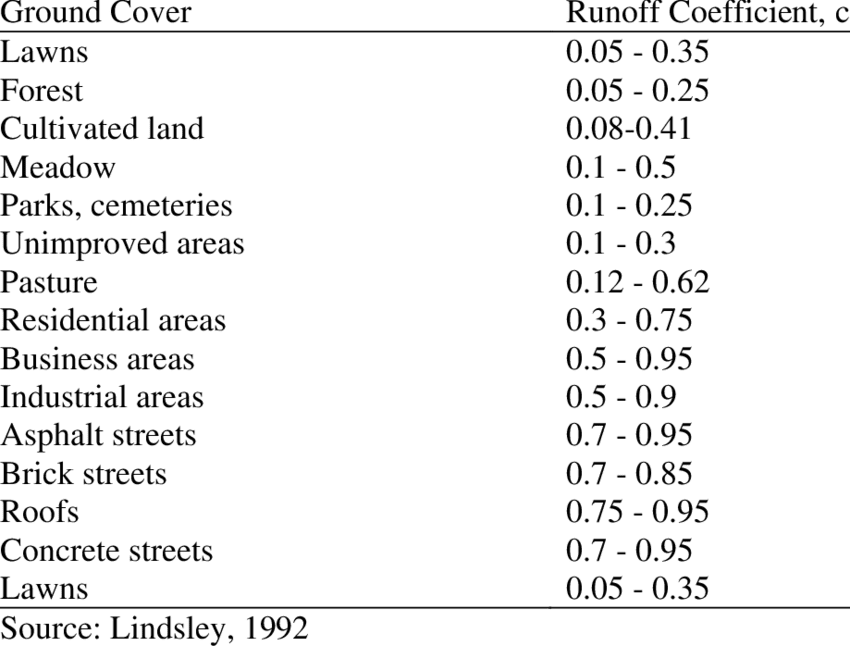
Values of the runoff coefficient (c)
The slope of the channel (drain) is taken minimum as 4 inches in 100 meter of drain. It might be insufficient for reaching self-clearing velocity. Increase the slope of the drain if slope is available.

The manning roughness coefficient (n) is taken a 0.015 which is for hard surface like concrete and black-topped roads. You can change as required.
This typical design considers the rainwater (storm) drainage only. The size needs to be increased if rainwater and household water (sewage) also need to be drained from the same drain. However, I have done trial calculations considering the household water (sewage) also. There was no significant change in the size of the drain considering both. Hence, only storm water is taken for the calculations.
DISCLAIMER*: THE DESIGN SHEET IS ONLY TO BE TAKEN FOR ROUGH CALCULATIONS. THIS SHEET IS INTENTIONALLY MADE SIMPLE TO USE. SITE-SPECIFIC PARAMETERS NEED TO BE USED FOR PRECISE DESIGN. THE AUTHOR IS NOT LIABLE FOR ANY ISSUES WITH ITS PROFESSIONAL USE.
Here is the YouTube video of it.
It’s no secret that urban drains in South Asian regions like India, Nepal, and Bangladesh face serious challenges, especially in flat regions. The stagnant dirty water is always present in those drains in the dry season and severely floods even with minimal rainfall.
This is a result of poorly designed urban drains. Let’s look into the root causes of this problem and see the potential solutions.
Design Flaws: The main problem behind the stagnant water in drains is their poor design.
- No self-cleaning: Ideally, drains should be self-cleaning, ensuring that accumulated silt and dirt are washed away by flowing water.
- Sedimentation Channel: Unfortunately, the low velocity in these drains acts more like a sedimentation tank, allowing sediment to settle and accumulate.
- Not adequate Size: Drains must have the capacity to handle rain from the catchment area. The drain size is often inadequate, leading to frequent overflows onto roads, even with minimal rainfall. The drain should not be large as this causes the water to flow slowly accumulating dirt. Again, adding other drains to the already in-use drain causes it to exceed the capacity of existing drains.
- Not adequate Slope: Maintaining a sufficient slope is crucial for achieving self-cleaning velocity. However, this is challenging in flat terrain, and reaching a self-cleaning velocity is hard for surface side drains. Maintaining the required slope will prevent the water from discharging to the main storm drain or a river as the drain will be below the storm drain or river.
Also, Check Out: The problems with Septic Tanks in flat urban areas.
The complex Conditions:
There are several other operational factors also make the situation complex. These include:
- Solid Waste Entry: Open drains become dumping containers for solid waste, including food wrappers, and dirt from roads. The rainfall also causes solid waste to flow into these urban surface drains.
- Liquid Waste: Household liquid waste, often underestimated, contributes to high sludge volume. Additionally, overused and not desludged septic tanks add to sludge accumulation.
- Misuse of Urban Drains: Urban drains are designed solely for rainwater, not sewage in case of a separate system. The absence of separate sewage drains underground turns roadside drains into combined drains. Unfortunately, treating combined drain water becomes a near-impossible task due to quantity and cost constraints for these areas. 80% of rainfall occurs only in monsoon season making it unviable to design a combined wastewater treatment system.
- Missing Exits: Many drains lack exit locations, often ending nowhere. These should end on to the water source preferably with treatment of the waste water. The drains are also constructed in small packages leading nowhere. The level is not maintained so that it can be discharged finally to the water source. Often in villages, these drains end at some ponds or a river.
- Road Cleanliness and manual sludge clearing: Roads need to be kept dirt-free to prevent dirt accumulation in drains. Municipalities manually clear accumulated dirt and sludge, but the timing is inconsistent as cleaning is a must before the monsoon in those dirt-accumulating drains. The road must also be kept dirt-free as manually cleaning the drain afterward is costly and labor-intensive.
Common Mistakes in Urban Drain Design: Several common mistakes are present in the drain designs. These include:
- Use of typical design: Urban design often lacks planning and relies on typical designs rather than the actual project requirements. Simply, the engineering design of drains is not done.
- Neglecting Drain Length: Ignoring the length of the drain leads to the use of undersized drains.
- Misaligned Drain Levels: The drain level often does not align with the main storm drainage network or river discharge source, possibly due to making drains in small packages.
Consequences of Poor Drains: There are consequences for these poorly designed and operated drains. These include:
- Mosquito Breeding Grounds: Stagnant water becomes a breeding ground for mosquitoes, increasing the risk of diseases.
- Foul Smells: Anaerobic digestion in drains produces methane and hydrogen sulfide, causing unpleasant odors.
- Waterborne Diseases: During floods, the mix of septic effluent and floodwater spreads waterborne diseases.
- Water Pollution: Untreated drain water discharge pollutes the natural water sources.
In conclusion, by addressing design flaws, preventing misuse, ensuring proper construction, and consistent maintenance, we can transform urban drain issues and benefit public health and the environment.
There are several guidelines adopted by each country for the design of storm drains and sewer drains. The below downloadable files show how the design is done and the Indian guidelines for design.

Rakesh Shah
Civil and Environmental Engineer
AUTHOR