The city of Birgunj Metropolitan City is one of the only six metropolitan cities of Nepal. It has an operational Integrated Solid Waste Management (ISWM) facility. Generally called a sanitary landfill, the ISWM has several components in it other than a simple landfill. Previously in the city, there was no proper solid waste management facility, and the solid waste was dumped on the river banks and barren public lands.

Figure: Dumping of Solid waste on river banks previously
The Integrated Solid Waste Management (ISWM) was constructed with the STIUEIP project by the Birgunj Metropolitan City. There are several individual components to this ISWM. Let’s see the components and know the roles of each component in the ISWM of Birgunj and see how solid waste handling operates in Birgunj.

Location:
The ISWM facility is located at Bishrampur, Bara district, which lies at the border of the Birgunj Metropolitan City. This dedicated plot is purchased and owned by the Birgunj Metropolitan City.
GOOGLE MAP LOCATION: https://maps.app.goo.gl/dVU49agRZp4NHK73A
STEP 1: Waste Collection
The unsegregated waste is collected from the individual houses, and through containers placed at different locations in the city. It is transported by truck and tractors to the ISWM facility.
STEP 2: Material Recovery Facility
The solid waste collected is weighted for its quantity as it is needed for tracking waste and for payment to the facility operating contractor. The useful materials like plastic bottles, metals, and other items are separated manually. After it is recovered, then the organic waste is transferred to the composting plant, and the remaining waste to the landfilling.
STEP 3: Composting plant
The organic components of the solid waste are shredded with a shredding machine. These are composted with a very simple method by heaps of organic waste placed in parallel positions, and the process is technically known as open windrow composting. These piles need to be turned so that oxygen is available and the microbes consume the food making valuable organic fertilizer. This raises the temperature and at the end, this heap heats up killing the pathogens present. Around 15 to 30 days later, these are shredded again and are ready to be used as organic compost. The intense foul smell is an indication of something wrong as windrow composting is ideally odor-free.
STEP 4: Landfilling (Cell 1/2/3)
After all the valuable waste is recovered and the organic portion is composted, the remaining valueless items are dumped in these landfill cells. A soil cover also needs to be kept to prevent birds, animals, and winds from scattering the materials. This also traps the bad odors from releasing preventing a smelly environment with methane and other gases production. Each cell is filled in phases ( phase 1 / phase 2 / phase 3) as shown in the figure below. The cover soil also takes up a large volume of the landfills.

The full capacity of these cells combined is 398,307 cubic meters of compacted waste. The life of the landfill is estimated to be 20 years if 30 % waste is recovered. If all waste is dumped into a landfill without composting or recovering the waste, the life of the landfill will reduce to 13 to 14 years only. Also, if more waste is recovered with segregation and 3R, then the life of the landfill can be extended.
The landfill produces methane gas in large quantities and also produces a foul odor by nature as anaerobic (oxygenless) decomposition takes place in it. Ideally, the methane gas should be collected through vent pipes and burned as methane is 80 times more potent greenhouse gas than carbon dioxide.
STEP 5: Leachate treatment (Anaerobic /Facultative/ Aerobic)
The waste in landfill starts to decompose in the absence of oxygen, producing gas and liquid called leachate. This leachate needs to be treated as this has a high polluting capacity (high BOD/COD) and has a very strong smell. A very simple technology for treating this leachate is through the oxidation/stabilization pond system. This has four ponds in order: Anaerobic (Oxygenless) / Facultative (Oxygen at top and no oxygen at bottom) / Aerobic (Oxygen containing) / Maturation (Kills pathogens).
The maturation pond also acts as an aerobic pond and a separate aerobic pond is not present. The three ponds do the treatment of the leachate with the help of bacteria and algae. After this, the cleared water is discharged to the Singhiya River nearby.

Buffer: Buffer is the green zone for air circulation and for moving workers, and machinery and to make the facility less compacted.
Closure and Post Closure
After the landfill’s useful life, it needs to be closed. Closing involves applying a final thick soil cover at the top of the waste surface. The leachate treatment and maintenance of the landfill will go on for decades. Eventually, it will be developed into an ecological park.
Hospital waste management facility
A separate treatment facility is also present to specifically treat waste produced by the medical clinics and hospitals. These are hazardous wastes and need to be made pathogens-free by autoclaving them. Afterwards, material recovery is done and the remaining waste is dumped in landfills as usual. The liquid waste is kept in a small biogas plant to produce biogas. The discarded and expired medicines are collected and need to be buried in concrete underground.
This Video shows the landfills in all Metropolitan Cities of Nepal
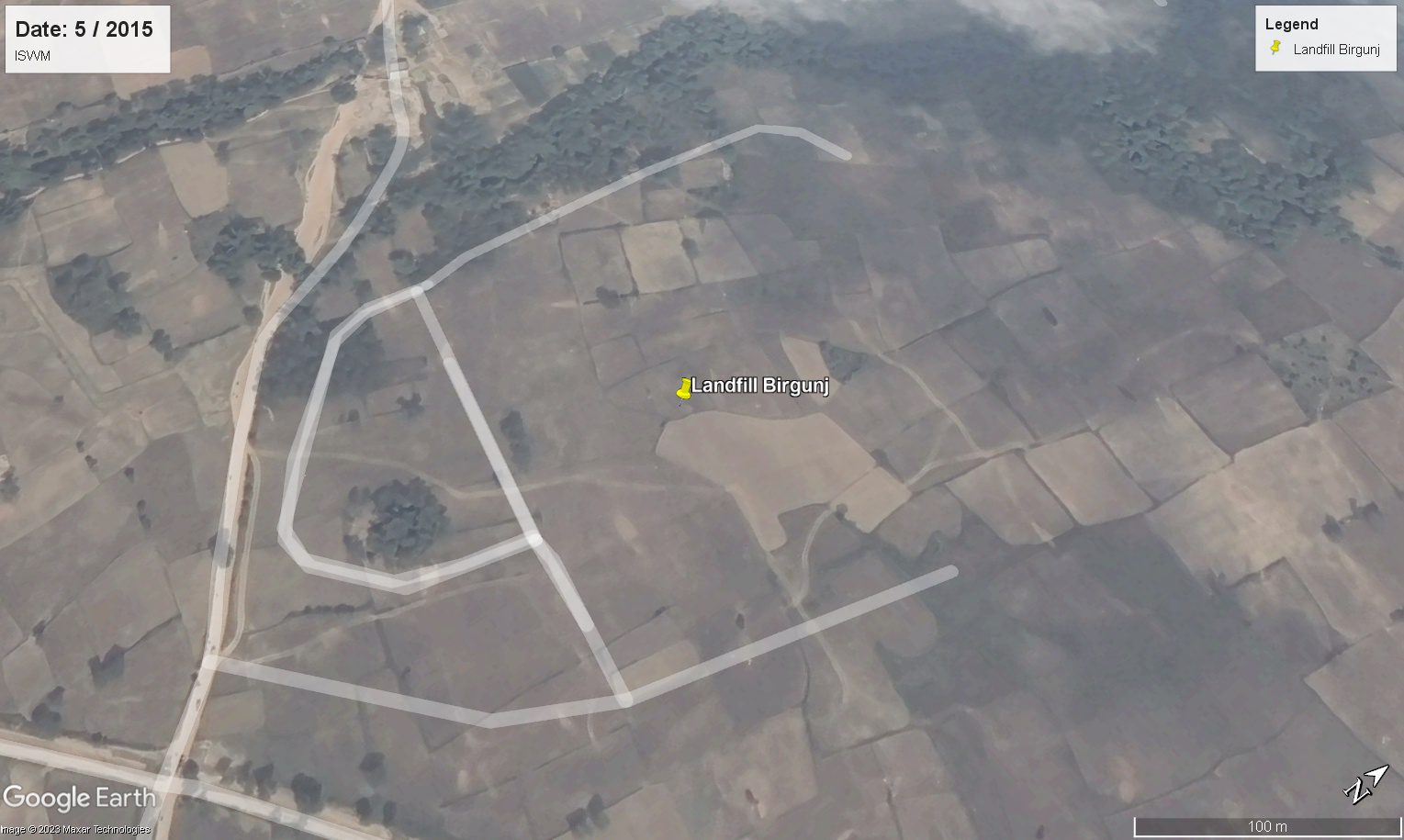
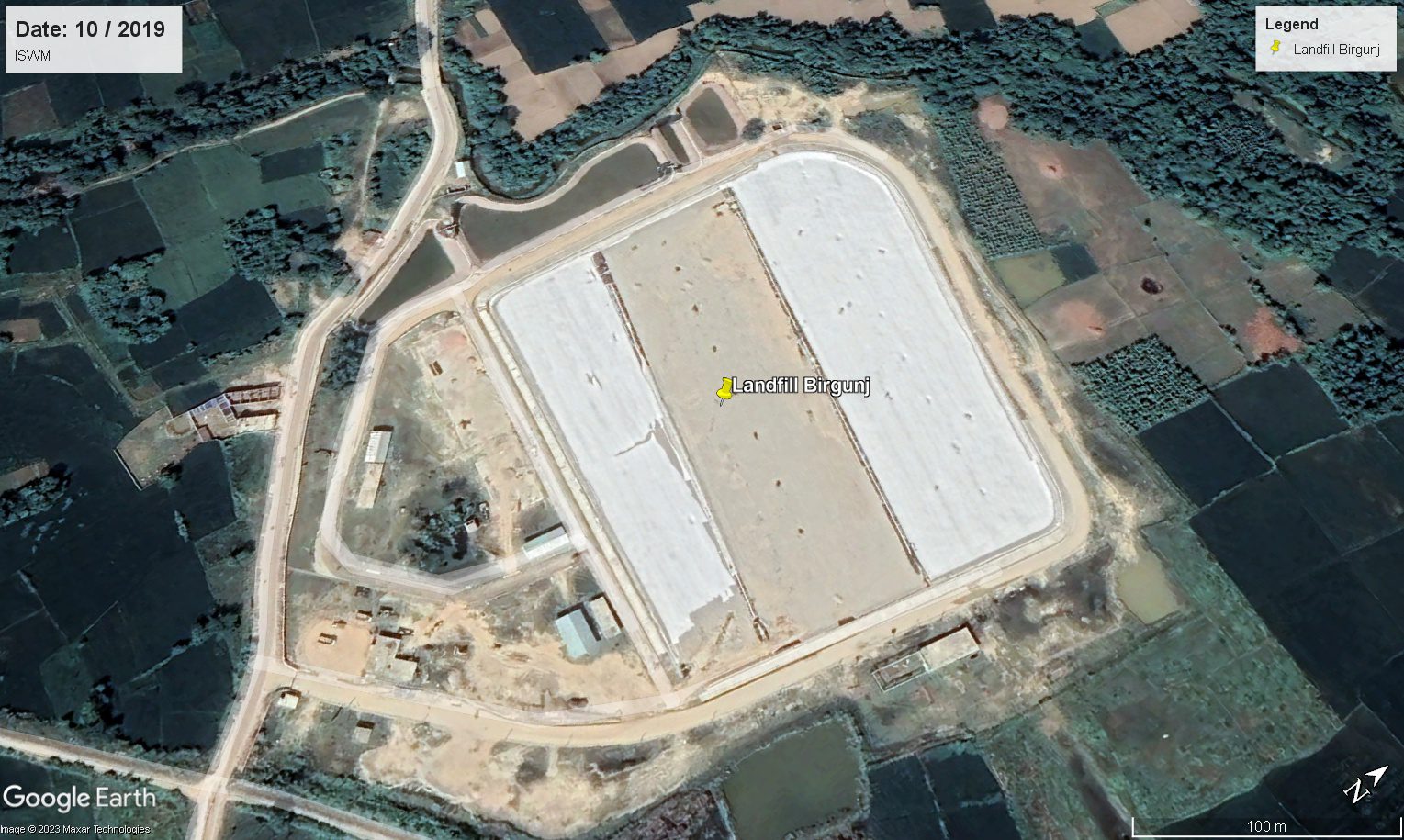
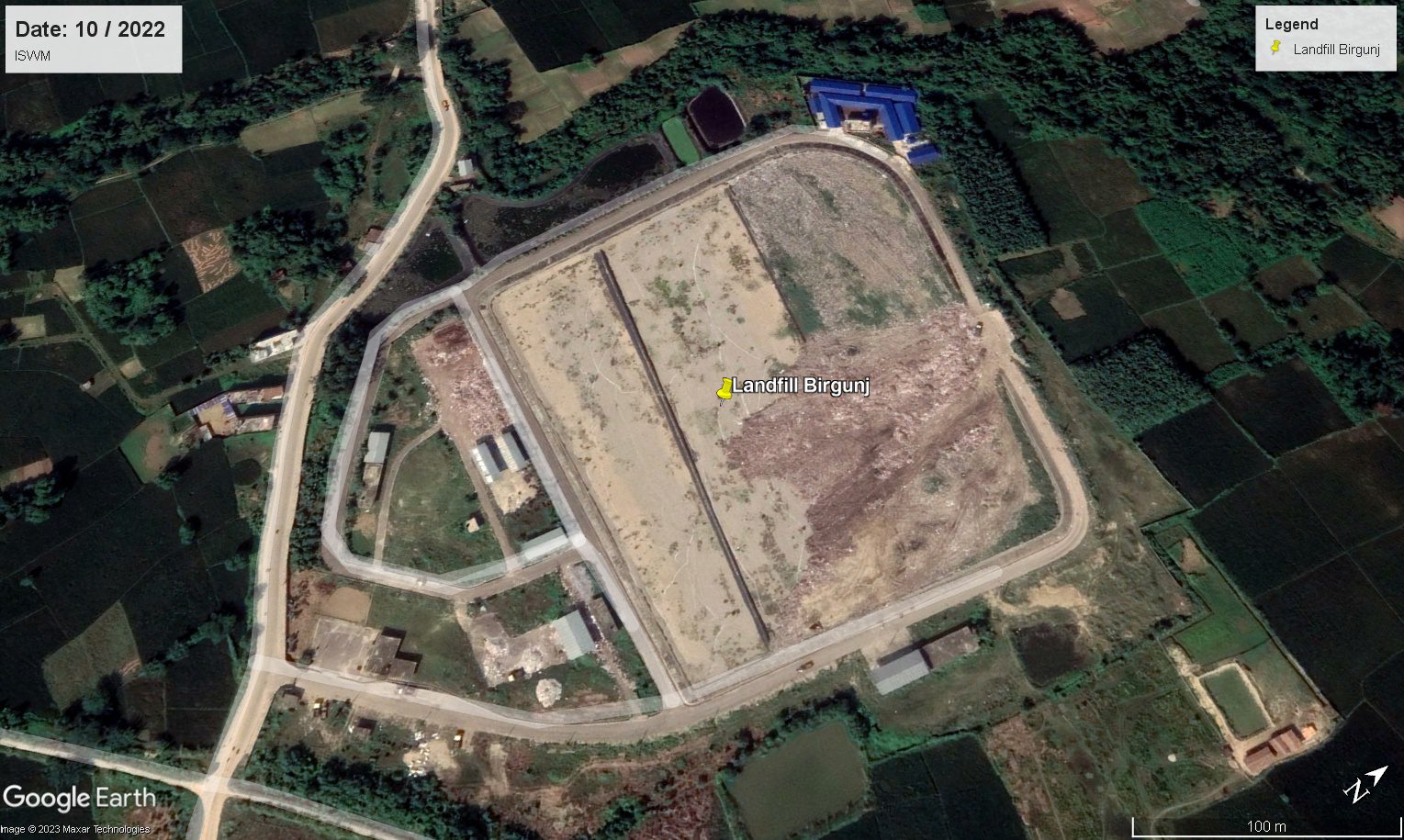
The Historical Image from Google Earth Shows the Birgunj ISWM progress: