How Should a Drain Be Cleaned of Accumulated Grit, Sediments, and Solid Waste?
In developing countries, drains are often cleaned manually. Storm sewers and roadside drains frequently become clogged due to inadequate and infrequent cleaning. They are also a byproduct of unsanitary activities.
Open and roadside drains tend to accumulate dirt and sediments in larger quantities compared to underground sewers. This is because roadside drains often have poor slopes, preventing the natural flow of debris. In contrast, underground sewers are typically designed and installed with self-cleaning capabilities.
The issue of accumulated black sludge is particularly severe in areas with flat terrain, as the lack of slope reduces the drain’s ability to self-clean effectively.
Step Usually Followed in Drain Cleaning
1. Manually desludging and keeping it on the road surface to dewater it
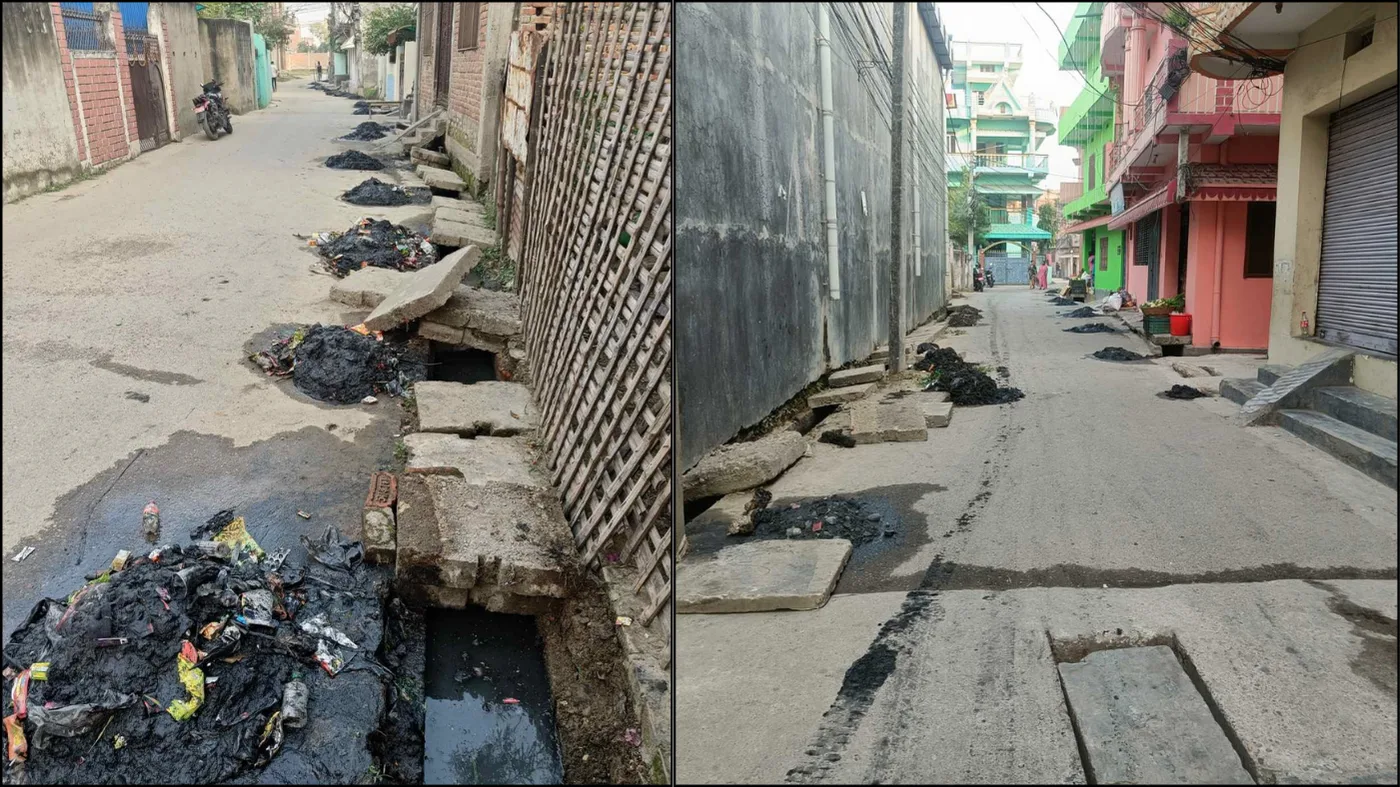
2. After a Day pick up the nearly dried black sediment sludge on a tractor


3. Send collected sludge to the landfill
Manual cleaning of drains requires significant manpower. To maintain optimal operation and keep the drain free of sediment, it should usually be cleaned 3 to 4 times a year.
DRAIN SLUDGE COLOR CHANGE
An interesting thing also happens after a day or two. The black color of the sludge changes to muddy brown in color due to chemical changes.

A Similar explanation of why the sludge and the polluted river are black is given in the link below:
LINK: What Causes a River to Turn Black? A Scientific Breakdown

Once fully dried, the black sludge loses its color and resembles ordinary mud on the roads. This remaining mud often gets washed back into the drains. More critically, it turns into airborne particles, contributing to road dust.

Resource Utilization
Suppose a city has a 200 km drain that needs to be cleaned twice a year. From the observation, it is seen that 2 person can clean around 400 meters of drain. Now, the sludge is cleaned the next day by 1 person for 400 meters.
Now, Calculating the manpower required to clean all drains twice a year will be

On calculation, cleaning small roadside drains in a city as considered would require approximately 3,000 workers. Additionally, the costs for resources such as tractors, fuel, and drivers must be factored in to make these drains dirt-free.
The city also has larger drains that accumulate dirt and solid waste. Although they do not require cleaning as frequently as small roadside drains, clearing them demands significantly more manpower and equipment, resulting in higher resource requirements.
What happens if drains are not cleaned?
Apart from the issues of drains becoming completely clogged and creating unpleasant sights, the accumulation of grit significantly reduces the drain’s water-carrying capacity.
Even during light rainfall, such drains can overflow, causing sewage-contaminated rainwater to come into contact with people, increasing the risk of disease transmission. Additionally, the sewage-laden sediment contains organic matter that begins to decompose, producing foul odors.
In contrast, underground or open roadside drains that carry only rainwater require less frequent cleaning. They are often self-cleaning during rainfall and some accumulated dirt is also non-problematic and drain remains dry.

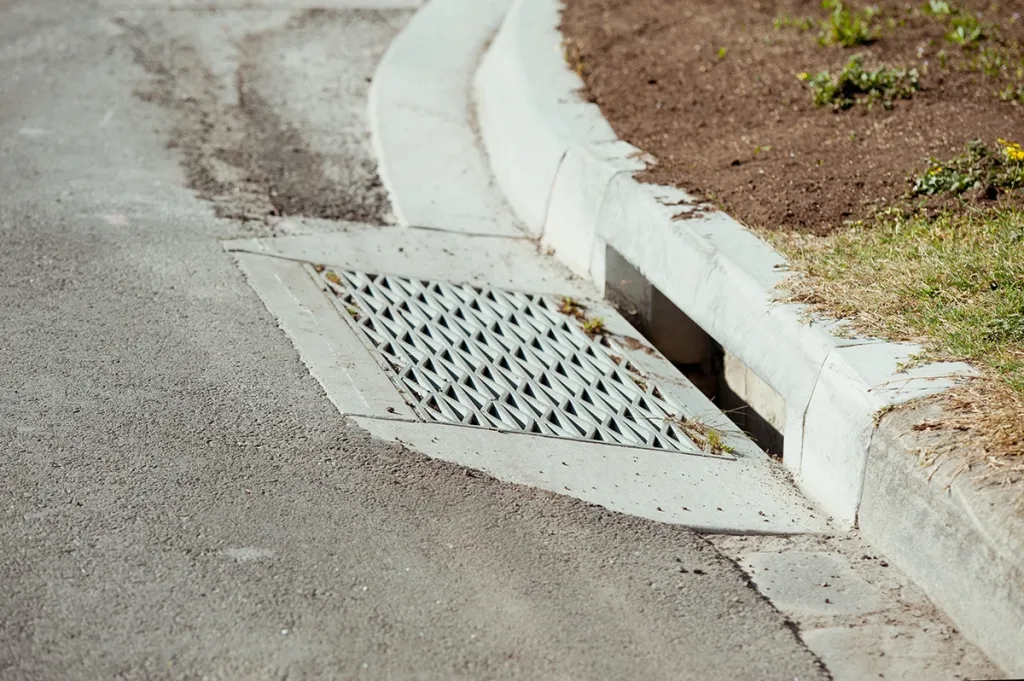
The need for frequent drain cleaning arises when stormwater and sewage are mixed. This issue is exacerbated in cities with inadequate natural slopes. Consequently, in South Asian countries like India, Bangladesh, and others, roadside drains are often dirty and almost always filled with stagnant, dirty black water.
A Way to Improve the drain cleanliness
The accumulation of dirt and solid waste in drains is a byproduct of various factors. To prevent this, certain measures should be implemented to ensure that dirt and waste do not end up in the drains:
- Solid Waste Collection
Regularly collect solid waste, place waste collection bins strategically, and promote public awareness while enforcing penalties for polluters. - Road Brooming
Roads should be vacuum broomed to collect dirt in vehicles for proper disposal. Manual brooming often leads to dirt being swept into roadside drains. - Paving Surfaces
Roads should be blacktopped, concreted, or covered with paving tiles to minimize dirt production. - Greenery Initiatives
Planting trees, creating lawns, and developing green areas help stabilize soil and capture airborne particles. Greenery also enhances the cleanliness and aesthetic appeal of the city. - Awareness and Enforcement
People and institutions are less likely to pollute when held accountable. Awareness campaigns should be paired with strict penalties to ensure compliance.

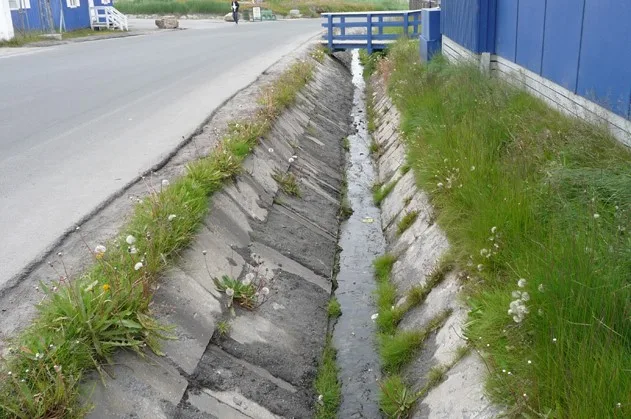
While these activities do not entirely eliminate the need for frequent drain cleaning, they significantly reduce it while also contributing to a cleaner and more beautiful city. Therefore, the government should focus on addressing the root causes—such as the improper functioning of other services—rather than solely prioritizing drain cleaning.
Implementing these measures often produces exponential benefits, as one positive action tends to lead to others, creating a ripple effect of improvement.
Shift from Open Drains to Closed Storm Sewers
Can a city in a developing country afford to channel all stormwater and sewage through closed sewers?
In developed countries, such issues are less prevalent, as most city drains are underground. While the initial capital investment is high, it provides a hassle-free, clean environment. Moreover, significant savings are achieved in long-term cleaning costs.
A Shift from Manual to Mechanical Technology
Nowadays, vehicles are also available which are called ditch cleaners. These vehicles can clean the small road side drains. These vehicles can offer a cheaper and faster solution to manual cleaning of drains.

Conclusion
Manual drain cleaning remains a necessity in many cities due to the lack of alternative options. Mechanical solutions can be considered to reduce manpower and costs, but the root causes of dirty drains should be the primary focus, rather than solely investing valuable resources in cleaning the drains.
The transition from open drains to closed sewers requires significant capital investment, which may be beyond the city’s financial capacity until there is rapid economic growth and increased income among residents. As the city modernizes, a cleaner environment naturally becomes a top priority. However, focus can always be made on a clean city even with limited resources.