This article outlines a roadmap for cleaning the Srisiya River, which is currently heavily polluted by industrial and domestic effluents. It discusses potential solutions, prioritized according to their effectiveness and feasibility.
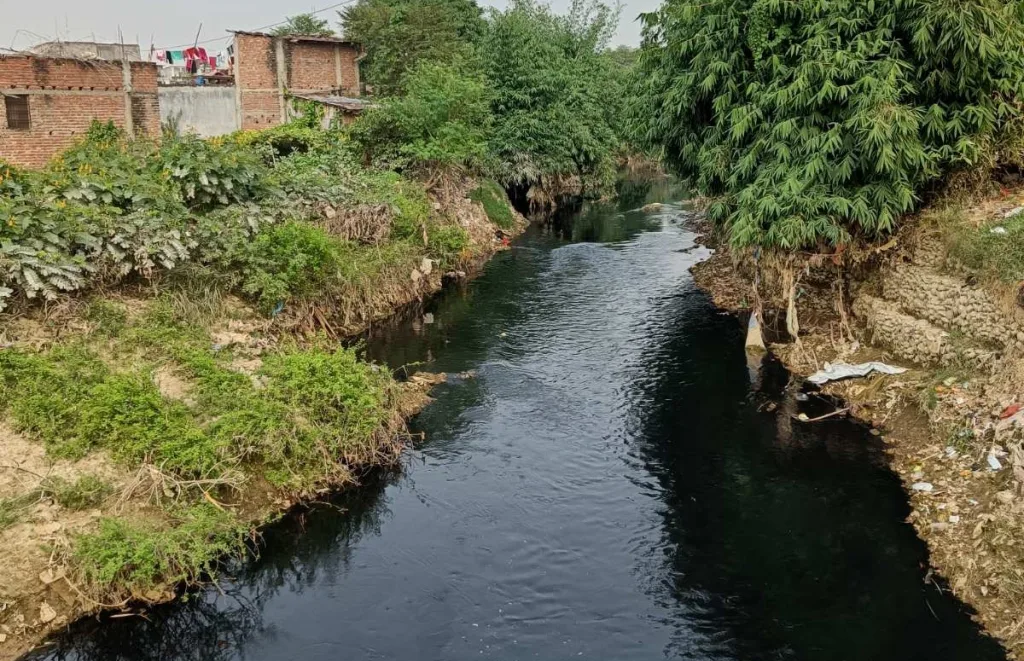
First of all, let’s note down all the problems:
Major Issues
- Untreated Industrial Effluents
- Untreated domestic sewage
- Nutrients in Water
- Solid Waste

1. Untreated Industrial Effluents
Most of the industries are established along the riverbank, ranging from leather, textile, oil-based, and paint industries, among others. However, these industries do not have effluent treatment facilities due to cost concerns. The environmental monitoring agencies are not strict enough to enforce the treatment of their waste. Only about 1 in 10 industries have a functioning treatment plant, including multinational companies like Britannia, Dabur, and KNP Japan.
These industrial effluents contain high levels of BOD, COD, sulfur, and other pollutants. They deplete the oxygen in the water, leaving it oxygen-deprived, which makes the river unable to sustain any form of life.
2. Untreated Domestic Sewage
One hundred percent of the domestic sewage from households in the Birgunj and Jitpur-Simara municipalities ends up in rivers, with the Srisiya River receiving the most sewage. This domestic sewage also contributes to the pollution of the river.
Household sewage contains wastewater from kitchens and bathrooms, not just from toilets. In this area, the plumbing system consists of separate pipelines. One pipe from the kitchen and bathroom directs wastewater to roadside drains, while the pipeline from the toilet commodes and pans leads to a septic tank, which then overflows into the same roadside drains.
The roadside drains are storm drains, which are meant to carry rainwater. However, it works more like a sewer in the absence of a sewage treatment plant. These drains are connected to main drains, which end up in the Srisiya river.
3. Nutrients in Water
The polluted water also has nutrients like nitrogen, phosphorous, potassium and other nutrient that also pollute the river. These come not only from industrial and domestic effluent but also from organic fertilizer used in agricultural fields. This nutrient causes eutrophication in the rivers and ponds.
4. Solid Waste
Birgunj Metropolitan City has a dedicated engineered landfill site for the disposal of solid waste. However, some household waste still ends up in the river. Industrial solid waste, such as fur and skin from leather processing, as well as sludge and oil from various industries, is also discharged into the Srisiya River.
The digestible organic components of the solid waste deplete the oxygen in the water. Meanwhile, inorganic matter, like plastics, floats, while other solid waste settles on the riverbed.
5. Low Natural Flow
This is not a source of pollution, but the state of pollution depends on it. The Srisiya River is a perennial river, flowing throughout the year. The river swells with rainwater during the monsoon season and has minimal flow during the dry season.
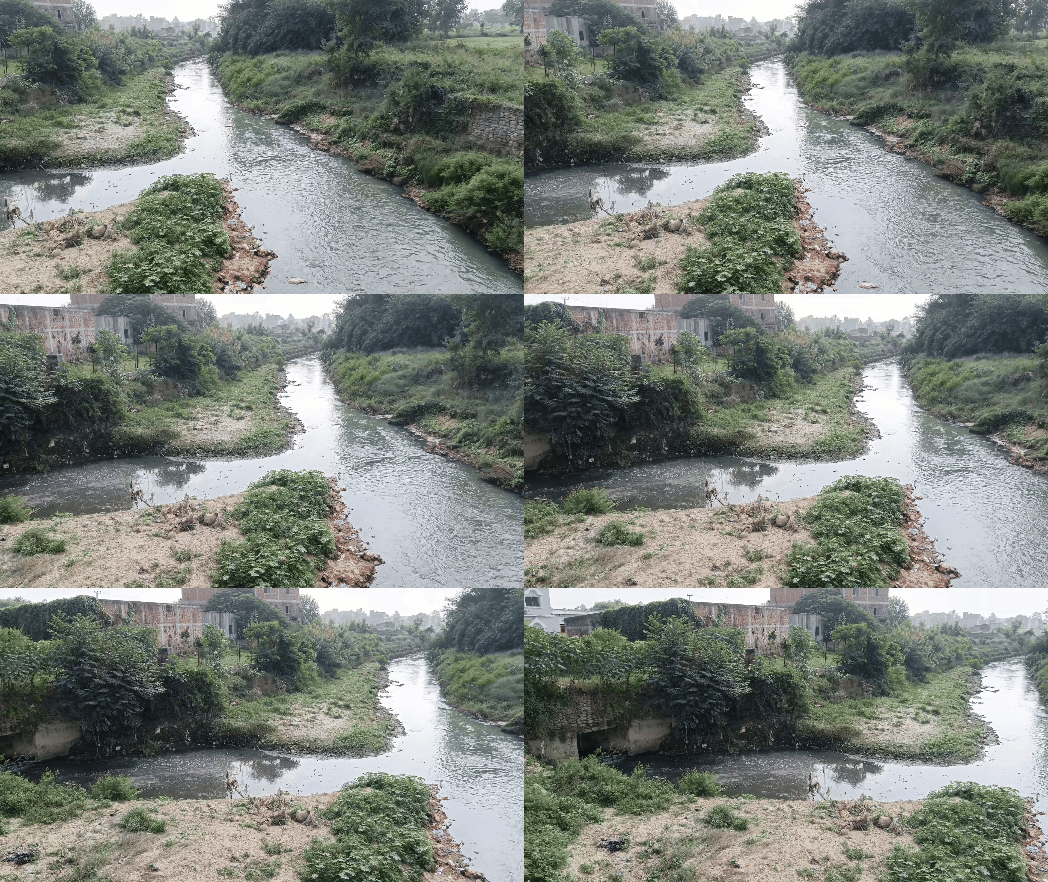
Due to dilution, the river appears cleaner during the monsoon season, which lasts for four months (June-September). For the remaining eight months, the river becomes completely black due to heavy pollution.
The main source of the river is the Ramban Forest, which has only minimal flow during the dry season. During this time, the Srisiya River receives most of its flow from untreated industrial and domestic sewage.
Dilemma of Clean Srisiya River
The condition of the Srisiya River is often judged by its color: muddy brown is considered a sign of cleanliness, while black indicates pollution. However, the color of the river is not a definitive measure of its pollution levels. There are various environmental parameters that must fall within acceptable ranges to truly assess the river’s health.
Even if the Srisiya River appears muddy brown, it can still be highly polluted with BOD, COD, ammonium compounds, sulfur compounds, and a heavy load of pathogens. These pathogens pose significant health risks to people who come into contact with contaminated water.
The main concern is the long-term health impact on communities living near the river. The pollution of the Srisiya River affects the environment, society, and culture in direct and indirect ways.
The cleanliness of the river cannot be judged solely by its color. While the color may provide a clue about whether the river is experiencing an aerobic or anaerobic process, it is not a definitive indicator of water quality. An aerobic process, which is oxygen-rich, is much more beneficial than an anaerobic process.
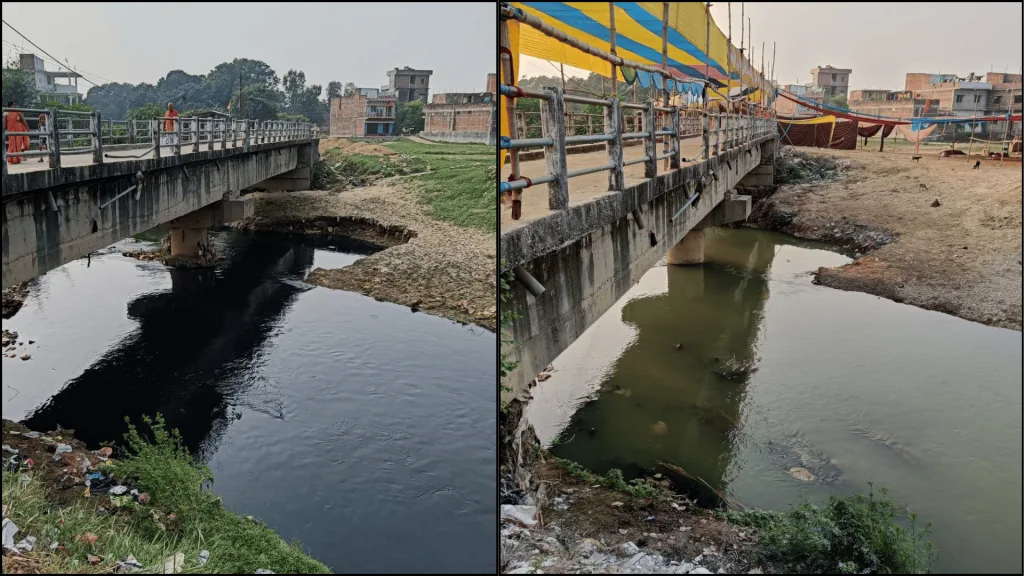
Our observations show that when the river undergoes an aerobic process (with sufficient dissolved oxygen), it appears muddy brown. In contrast, an anaerobic process (with a lack of dissolved oxygen) causes the river to appear black, primarily due to the presence of iron sulfide (FeS).
The aerobic process is faster and does not produce unpleasant odors, while the anaerobic process is slower and generates foul smells. However, regardless of the process, if the river’s quality parameters are exceeded, the water remains polluted and can transmit diseases.
Although nature can heal itself and remove pollutants, the process is slow, and the rate of pollution is high. As a result, the Srisiya River cannot cleanse itself in the polluted areas, and it will only improve over an extended period. During this time, the river merges with other rivers and eventually reaches the Ganga River.
Because the natural healing process is slow, we cannot rely on it alone. A combination of mitigation strategies and engineered solutions must be implemented to restore the river to a healthier state.
A rough pollution contribution may look like this:
| Problem | Pollution Contribution (%) |
| Industrial Effluent | 60 % |
| Domestic Sewage | 20 % |
| Nutrient | 10% |
| Solid Waste | 10% |
Road Map Steps: Priority Based
The roadmap to clean the Srisya River includes several tasks to be done

Task 1: Control Industrial Pollution
Many industrial owners are either unaware or act as if they don’t need to treat the waste they produce. Although they may propose constructing an effluent treatment plant in their environmental assessment reports, they often fail to follow through. However, monitoring agencies must enforce compliance, requiring them to construct and operate treatment plants according to standards.
Each industry should have a custom-designed effluent treatment plant within its facility. These plants can employ various methods, such as the Activated Sludge Process (ASP), Membrane Bioreactor (MBR), Lagoon, Waste Stabilization Pond, Constructed Wetland, or others.
Among the many treatment options, the choice of process should consider factors like land area required, operating costs, and the quality of treated effluents. Typically, ASP and MBR, along with primary treatments like primary sedimentation and sedimentation with coagulation, are used.
Task 2: Common Industrial Effluent Treatment Plant
As an alternative to individual effluent treatment plants, a common industrial effluent treatment plant can be adopted. A study was conducted to estimate the costs, revealing that a substantial NPR 2.46 Arab is needed just to construct a common effluent treatment plant using the proposed Activated Sludge Process (ASP) method.
The operating costs will also be high, requiring skilled human resources and a laboratory for proper operation. Even with a common effluent treatment plant, primary treatments like sedimentation are necessary to reduce the load on these facilities.
The main challenge with common treatment plants is the high variability of the mixed effluent. While sewage has relatively consistent properties, different types of industries produce a wide range of effluents, which are much harder to treat. Additionally, domestic sewage from the coverage area could also be diverted to the same common treatment plant.
Task 3: Construct and Operate Sewage Treatment Plant
A sewage treatment plant has been constructed in Birgunj using the Waste Stabilization Pond method. However, this plant has limited coverage and remains non-operational due to the lack of a sewer line distribution network.
Most parts of the city along this river do not have either centralized or decentralized wastewater treatment facilities. Domestic sewage also has a high potential to pollute the river and contribute to the pollution of the Srisiya River.

Industrial pollution is the primary source of contamination in the Srisiya River. However, constructing and implementing a centralized sewage treatment plant would greatly help reduce pollution in this river and support its restoration to its original state.
Additionally, it is not feasible to cover the entire city with a single sewage treatment plant. Additional centralized treatment plants, along with multiple decentralized treatment facilities, must be developed to cover all areas and effectively treat domestic sewage.
Task 4: The solution to Low Natural Flow
The Srisiya River has a low flow during the dry season, with most of the water coming from industrial and household effluents. Certain methods can be applied to enhance the river’s natural flow. First, treated effluent can help increase the river’s flow. Secondly, dilution through an irrigation canal can also be used to add water to the river.
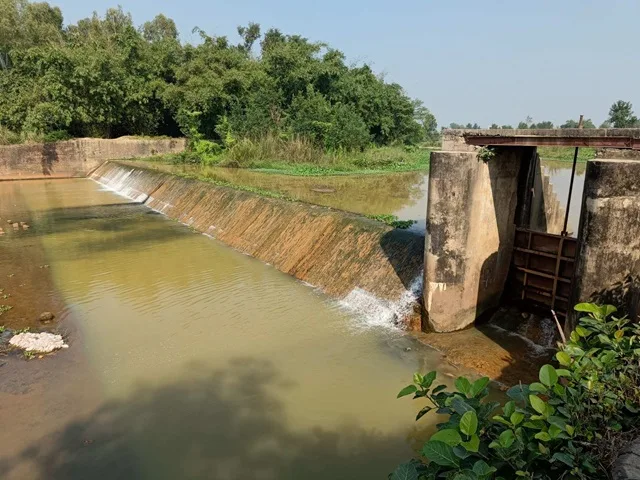
To increase water levels in the river during low-flow periods, constructing multiple low-rise dams is a potential solution. These dams would restrict the flow along the river, substantially increasing the river’s water volume. The most important requirement is that the water entering these dams must be clean to prevent further pollution and avoid eutrophication in the Srisiya River.
Task 5: Manage Industrial Solid Waste
The dam should be constructed to ensure safety from flooding that occurs during the monsoon rains.
The city of Birgunj has a sanitary landfill designed for domestic and institutional solid waste. However, waste from the hundreds of industries in the area is not accounted for in this landfill. Therefore, managing the solid waste produced by industries is a challenge that requires attention.
A separate waste-to-energy facility or sanitary landfill is needed to prevent industrial waste from ending up in the Srisiya River or on barren lands.
Additionally, rice husk is the primary fuel for industries in this area, which results in the production of rice husk ash. While it can be managed to some extent in fields, handling it in large quantities presents a significant challenge.
Task 6: Removal of Nutrients
The final piece of the puzzle for a cleaner Srisiya River is to control the nutrients entering the river. Industrial and domestic effluents pollute the river not only with BOD and organic matter but also with nutrients. While effluent treatment plants are generally designed for the removal of BOD, additional steps are required to remove nutrients. This involves adding further treatment facilities and incurring additional costs.
Additionally, some urea and DAP fertilizers end up in the river through runoff from fields. The major impact of these nutrients is that they cause eutrophication, leading to algal blooms that turn the river green with algae. This also encourages the growth of water hyacinths and water lilies, which are difficult to remove and cover the river’s surface.
Nutrient removal is relatively challenging to achieve. However, it can be addressed through enhanced effluent treatment facilities, decentralized constructed wetlands, and other plant-based solutions.
Conclusion
Reviving this river to its pristine state is a challenge that requires capital investment, strong law enforcement, and high motivation. Each task discussed plays a role in making the Srisiya River clean and pure. No single task alone will clean this river; multiple tasks must be implemented simultaneously to see any improvement in the quality of the Srisiya River.
Now, the question is: How strongly do the stakeholders and the government want the Srisiya River to be cleaned?”
Also Read: What Causes a River to Turn Black? A Scientific Breakdown