What is a Septic Tank?
“In simple, a septic tank is a sedimentation tank with a longer detention time where there is also a provision for sludge digestion”. Also, the septic tank can be thought of as a technology that works in between a sedimentation tank and a biogas plant.
The digestion process occurs in the septic tank in the absence of oxygen known as anaerobic digestion. The anaerobic digestion emits gases like hydrogen sulfide, methane, and carbon dioxide. Thus, the tank is enclosed and the gas is released with the help of vent pipes.
The septic tank does the work of primary treatment where the sewage BOD/COD and suspended solids are reduced. Generally, a reduction of BOD5 of 30-40% and a reduction of suspended solids of 50-70% is reduced in the septic tank. Thus, the effluent liquid has reduced pollution capacity but also needs to be treated as it has high polluting potential and a high number of pathogens (high levels as 230 million bacteria count per ml of effluent).
Zones in a Septic Tank (Bottom to Top)
- Digested sludge storage zone
- Sludge digestion zone
- Sedimentation zone
- Scum zone
- Free Board
Why Septic Tank?
The septic tank is a century-old technology but is still relevant in this modern age of technology. The major reasons are:
- It is easy to design, construct, and operate
- It requires no energy for operation
- BOD and SS are removed considerably
- Sludge obtained is very less, 60% volume reduction (a feature of anaerobic digestion)
- Well suited for isolated areas
However, there are also some issues related to the septic tank. These are:
- Emits a foul odor if leakage occurs
- Needs desludging at regular intervals
- Uniform working is not attained due to high variability
Some Criteria for design and operation
- Length to width ratio: 2-4
- Freeboard depth: 0.3-0.5 meter
- Effective depth: at least 1 meter
- Depth range: 1-2 meters
- Minimum Volume: 1 cubic meter
- Minimum In-out pipe diameter: 10cm (4inches)
- Inlet and outlet pipes should be immersed in liquid with a T-pipe
- Sludge is removed when solid sludge depth becomes 33% (1/3rd) of the liquid depth
- Two compartments is good: 1st compartment (2/3rd length of septic tank), 2nd compartment (1/3rd length of septic tank)
Design a Septic Tank and Soak Pit Online Excel with Automatic Drawings

*Just enter the number of people it is designed for and get the design and drawings
CPHEEO Guidelines
The Central Public Health and Environmental Engineering Organization (CPHEEO) (Website: CPHEEO.Gov.in) has recommended a thumb rule for sizing a septic tank. These are tabulated as:
| Number of Users | Length (m) | Width (m) | Total Depth (m) (including Free Board of 0.3m) | |
| Desludging Interval (2 years) | Desludging Interval (3 years) | |||
| 5 | 1.50 | 0.75 | 1.30 | 1.35 |
| 10 | 2.00 | 0.90 | 1.30 | 1.70 |
| 15 | 2.00 | 0.90 | 1.60 | 2.30 |
| 20 | 2.30 | 1.10 | 1.60 | 2.10 |
| Number of Users | Length (m) | Width (m) | Total Depth (m) (including Free Board of 0.3m) | |
| Desludging Interval (2 years) | Desludging Interval (3 years) | |||
| 50 | 5.00 | 2.00 | 1.30 | 1.54 |
| 100 | 7.50 | 2.65 | 1.30 | 1.54 |
| 150 | 10.00 | 3.00 | 1.30 | 1.54 |
| 200 | 12.00 | 3.30 | 1.30 | 1.54 |
| 300 | 15.00 | 4.00 | 1.30 | 1.54 |
Frequently Asked Questions (FAQ)
A septic tank is an underground watertight container that collects and treats household wastewater. It allows solid waste to settle at the bottom while allowing liquids to flow out for further treatment or disposal. It’s commonly used in areas without connection to a municipal sewer system.
The minimum septic tank capacity is typically 1,000 gallons (approximately 3,800 liters) for residential systems. Some jurisdictions specify a minimum of 500 gallons for the inlet compartment alone. Tanks smaller than these minimums do not provide adequate detention time for proper settling and digestion processes.
The optimal length to width ratio for septic tanks ranges from 2:1 to 3:1. This ratio ensures proper flow distribution and prevents short-circuiting of wastewater through the tank, allowing adequate time for settling and treatment.
The minimum liquid depth should be at least 4 feet (1.2 meters) according to most standards. Some regulations specify a minimum of 2.5 feet (762 mm), but deeper tanks (4-6 feet) are preferred for better treatment efficiency. Maximum liquid depth typically should not exceed 6 feet (1.8 meters).
Freeboard is the vertical distance between the liquid level and the top of the tank cover. A minimum of 9 inches (23 cm) freeboard is typically required, though some standards recommend 12 inches (30 cm). This space prevents overflow during peak flows and accommodates gas production.
Two-compartment septic tanks provide superior treatment efficiency. The first compartment should contain between one-half to two-thirds of the total capacity for primary settling and digestion. The second compartment provides additional settling time, preventing solids carryover and producing clearer effluent. This configuration significantly improves overall performance compared to single-compartment designs.
Minimum pipe diameter for septic tank inlet and outlet is 4 inches (10 cm). Both inlet and outlet should use baffle walls or vented tees that extend into the liquid zone. The inlet device should extend at least 6 inches below the liquid level, while the outlet should extend 40% of the liquid depth (or 35% for horizontal cylindrical tanks).
A properly functioning septic tank removes approximately 30-50% of BOD (Biochemical Oxygen Demand) and 40-60% of TSS (Total Suspended Solids). With optimal detention time of 48-72 hours, removal can reach up to 68% for BOD and 65% for TSS. However, effluent still requires secondary treatment before disposal.
Desludging frequency typically ranges from 2 to 5 years depending on tank size and usage. Standard recommendations suggest every 3 years for household systems. The EPA recommends pumping when sludge occupies one-third of the liquid depth. Smaller tanks or those serving more users require more frequent desludging (every 1-2 years), while larger, properly sized tanks may extend to 5 years.
From bottom to top, a septic tank has five zones: sludge storage zone (bottom layer of settled solids), sludge digestion zone (active anaerobic breakdown), clear zone or sedimentation zone (middle liquid layer), scum zone (floating fats and grease), and freeboard (air space above liquid level). Proper design maintains these distinct zones for optimal treatment.
Septic tanks are constructed from precast reinforced concrete (minimum 2.5-inch wall thickness), fiberglass, polyethylene plastic, or steel (minimum 12 gauge with bituminous coating). Concrete is most common due to durability. Tanks over 5,000 gallons may use masonry construction with proper reinforcement and waterproofing. All materials must be watertight and resistant to corrosion.
Position septic tanks at least 5 feet (1.5 m) from buildings, minimum 50 feet (15 m) from wells or water sources, and away from areas with heavy traffic. Ensure accessibility for maintenance trucks while maintaining adequate distance from property boundaries. Consider natural ground slope and soil drainage characteristics for the associated drain field.
Optimal detention time (hydraulic retention time) is 48 to 72 hours for effective treatment. Minimum detention time should be at least 24 hours. Longer retention times increase BOD and TSS removal efficiency. This allows adequate settling of solids and anaerobic digestion of organic matter.
Yes, most jurisdictions require permits before septic tank installation. The process typically includes submitting design plans, conducting soil percolation tests, obtaining approval from local health departments or environmental agencies, and scheduling inspections during and after installation. Requirements vary by location, so check with your local health department or building authority.
A soak pit (soakaway or leach pit) is a secondary treatment and disposal system that receives effluent from the septic tank. It consists of a covered excavation filled with gravel or broken bricks that allows treated wastewater to percolate into the surrounding soil. The soil provides additional filtration and biological treatment before water reaches the groundwater table.
Anaerobic digestion in septic tanks involves bacteria breaking down organic matter without oxygen. This process produces methane, carbon dioxide, and hydrogen sulfide gases. The bacteria consume settled sludge, reducing its volume by approximately 60% and converting it into more stable compounds. This is why septic tanks must be vented to safely release gases.
Never dispose of: grease, oils, and fats; harsh chemicals, paints, or solvents; medications and antibiotics (which kill beneficial bacteria); non-biodegradable items like wipes, diapers, or sanitary products; cigarette butts; coffee grounds; excessive amounts of strong detergents; or large volumes of water from water softeners. These items can clog the system or disrupt the biological treatment process.
Warning signs include: slow drainage throughout the house, sewage odors around the tank or drain field, sewage backup in toilets or drains, pooling water or wet spots over the tank or drain field, unusually lush grass growth over the system, and gurgling sounds in plumbing. Address these issues immediately to prevent system failure.
Not all soils are suitable for septic systems. The drain field requires soil with adequate percolation rate—not too fast (like pure sand) or too slow (like heavy clay). A percolation test determines if soil can absorb and treat effluent at the required rate. Poor soil may require alternative drain field designs, raised systems, or mound systems.
Septic tanks provide primary treatment through settling and anaerobic digestion, removing 30-50% of BOD. Sewage treatment plants are more advanced systems incorporating aeration and aerobic biological treatment, achieving 90-98% BOD removal. Treatment plants require electricity and more maintenance but produce higher quality effluent suitable for more direct discharge.
The top of the septic tank should typically be 6 to 24 inches below ground surface. Access manholes must not exceed 12 inches below grade (or be extended to grade level with sealed access). Covers must support at least 500 pounds per square foot when buried less than 3 feet deep. Consider frost depth in cold climates when determining burial depth.
Baffles at inlet and outlet points prevent disturbance of the scum and sludge layers. The inlet baffle directs incoming wastewater downward into the clear zone, while the outlet baffle draws effluent from the clear zone between scum and sludge. Baffles must extend both below and above the liquid level, and venting between compartments is required.
Temperature significantly impacts anaerobic digestion efficiency. Bacterial activity slows in cold temperatures, reducing treatment efficiency and sludge digestion rates. In colder climates, tanks require larger capacity (sizing factor adjustment) and deeper burial to maintain temperature. Optimal biological activity occurs between 20-35°C (68-95°F).
Regular maintenance includes: annual sludge level inspections to determine pumping needs, pumping every 2-5 years depending on size and usage, checking inlet and outlet baffles for damage, ensuring access covers are secure and watertight, inspecting for cracks or leaks, and monitoring the drain field for signs of failure. Professional inspection every 3 years is recommended.
Most experts agree that septic tank additives are not necessary for properly designed systems. Normal household wastewater contains sufficient bacteria for effective treatment. Chemical additives may actually harm beneficial bacteria or damage tank components. Some biological additives are harmless but offer no proven benefit. Regular pumping and proper use are more important than additives.
Yes, multiple buildings can share a septic system if it’s properly sized for the total number of users and daily wastewater volume. The tank must be large enough to handle combined flows while maintaining adequate detention time. Local regulations often govern multi-dwelling systems, and commercial-grade designs may be required for larger installations.
Removed septage must be transported by licensed haulers to approved treatment facilities. It may be processed at wastewater treatment plants, dedicated septage treatment facilities, or composting operations. Treated septage can sometimes be land-applied or converted to biosolids. Illegal dumping contaminates water sources and is subject to penalties.
A properly designed, installed, and maintained septic tank can last 20-40 years or more. Concrete tanks typically last longest (40+ years), while steel tanks may last only 15-20 years due to corrosion. Fiberglass and plastic tanks can last 30-40 years. Lifespan depends heavily on regular maintenance, proper use, and initial construction quality.
A 3-bedroom house typically requires a minimum 1,000-gallon septic tank, though 1,250-1,500 gallons is often recommended for better performance. Tank sizing should account for actual occupancy (typically 2 people per bedroom plus guests), daily water usage (150-200 gallons per person), and desired pumping interval. Larger tanks allow less frequent pumping and better handle surge flows.
Yes, regular inspection is critical for preventing problems before they become emergencies. Many issues develop gradually—by the time symptoms appear, significant damage may have occurred. Annual inspections catch issues like rising sludge levels, damaged baffles, or beginning drain field problems when they’re easiest and cheapest to address. Preventive maintenance is far less expensive than system replacement.
Rakesh Shah (Civil and Environmental Engineer)
Author
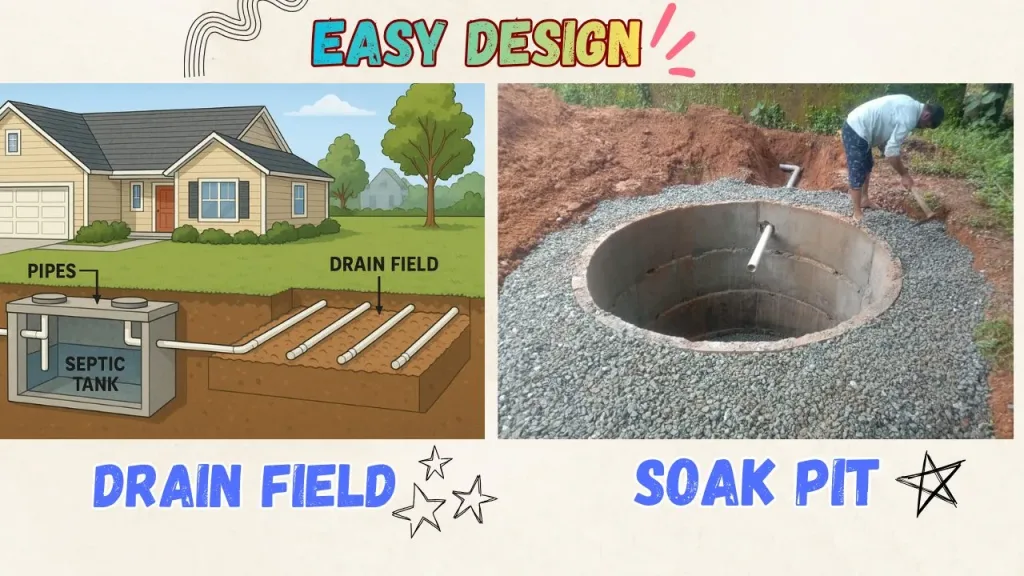
Also, the effluent from the septic tank has to go to the wastewater treatment plant. However, for remote locations and unsewered areas, it does either a soakpit or a drain field.
Here’s an easy tool for sizing the soakpit or drain field as per your requirement.
This article provides an accessible approach to septic tank design, especially with the online tool’s ability to simplify the process for users unfamiliar with technical specifications. I found the breakdown of capacity calculations and the emphasis on local soil and environmental factors particularly useful—these are critical aspects that can easily be overlooked without guidance. Your step-by-step approach makes it seem much less daunting to design a septic system that meets both regulatory standards and site-specific needs.
I’m curious, does the tool take into account regional variations in regulations or soil characteristics, like clay-heavy or sandy soils? It would be helpful to know how adaptable the tool is to different environmental contexts.
Thank you for your wonderful comment.
The calculation tool is intentionally made simple to use. Any non-professional can also get an idea of the size of the septic tank and soak pit to be used.
As per your curiosity towards considering regional variation or soil characteristics, the soak pit design has considered those as infiltration capacity are highly dependent on soil characteristics. But for the septic tank sizing itself, these conditions are not considered.
The most important factor for the septic tank design is the temperature of that area. The process slows down in colder areas thus requiring a bigger tank size. Whereas, for hotter areas, the digestion is fast and the size required is lesser.
There is a complex design process available that considers all those factors, but it cannot be understood by a non-professional or an engineer. If you want to know more about it, do not hesitate to ask further.