Digital TDS meters are very popular for measuring the total dissolved solids of the liquid tested. Can it measure the TDS of the sugar content in water?
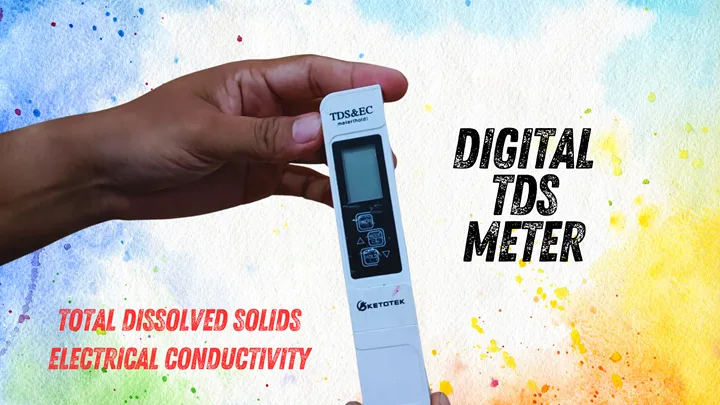
Measuring a liquid’s TDS with this device is very easy. Simply dip the tip into the liquid, and you’ll get the total dissolved solids and electrical conductivity values within seconds.
The device works by passing a current from one point to another within the tip, with the liquid acting as the medium for conducting the current. Therefore, the liquid must be capable of conducting electricity.
In fact, these meters measure the electrical conductivity of the water. However, since sugar has no electrical charge and is a neutral compound, can these meters accurately measure the TDS of a sugar water solution?
To explore this, a test was conducted to measure the TDS of a sugar water solution. For this experiment, a zero TDS water was purchased from a pharmacy, which is typically used for injection purposes.
STEP 1: 50 ml of this zero TDS water was taken in four glasses.
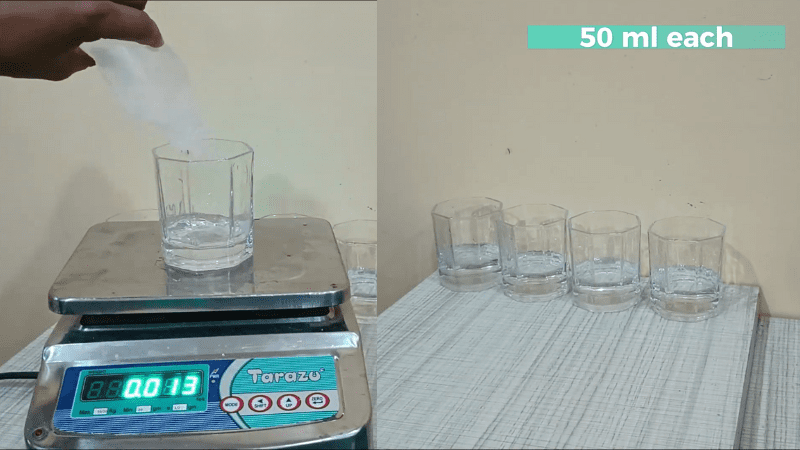
STEP 2: 0.5, 1.0, and 1.5 grams of sugar were accurately weighted and made into a sugar water solution.
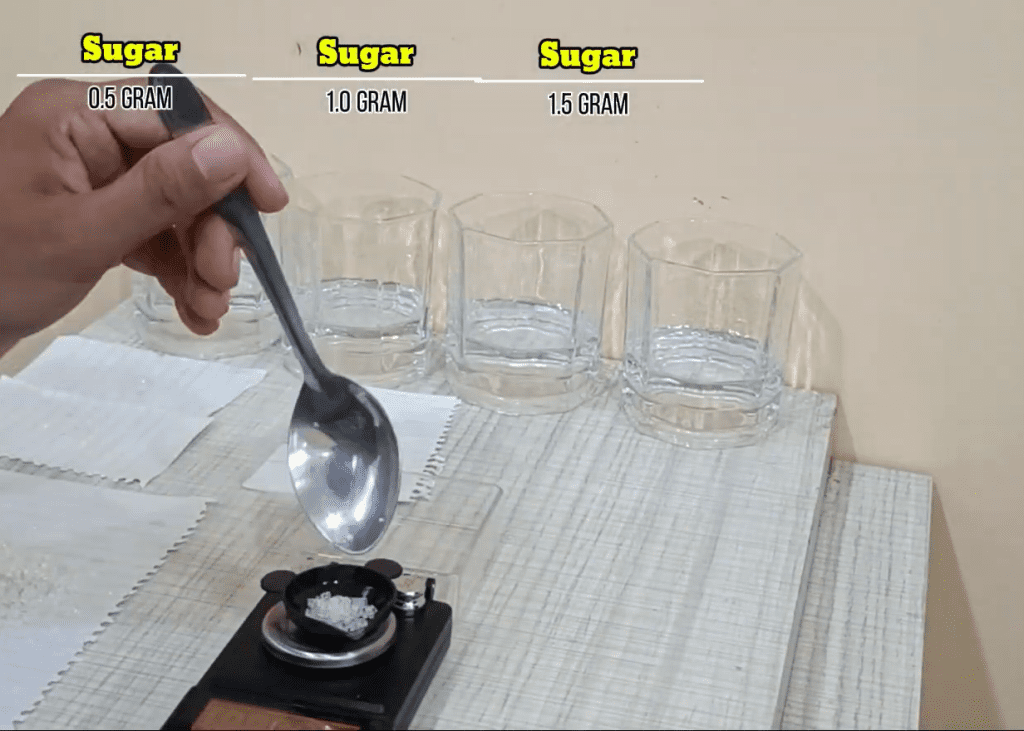
STEP 3: Measuring the TDS of the sugar water solution
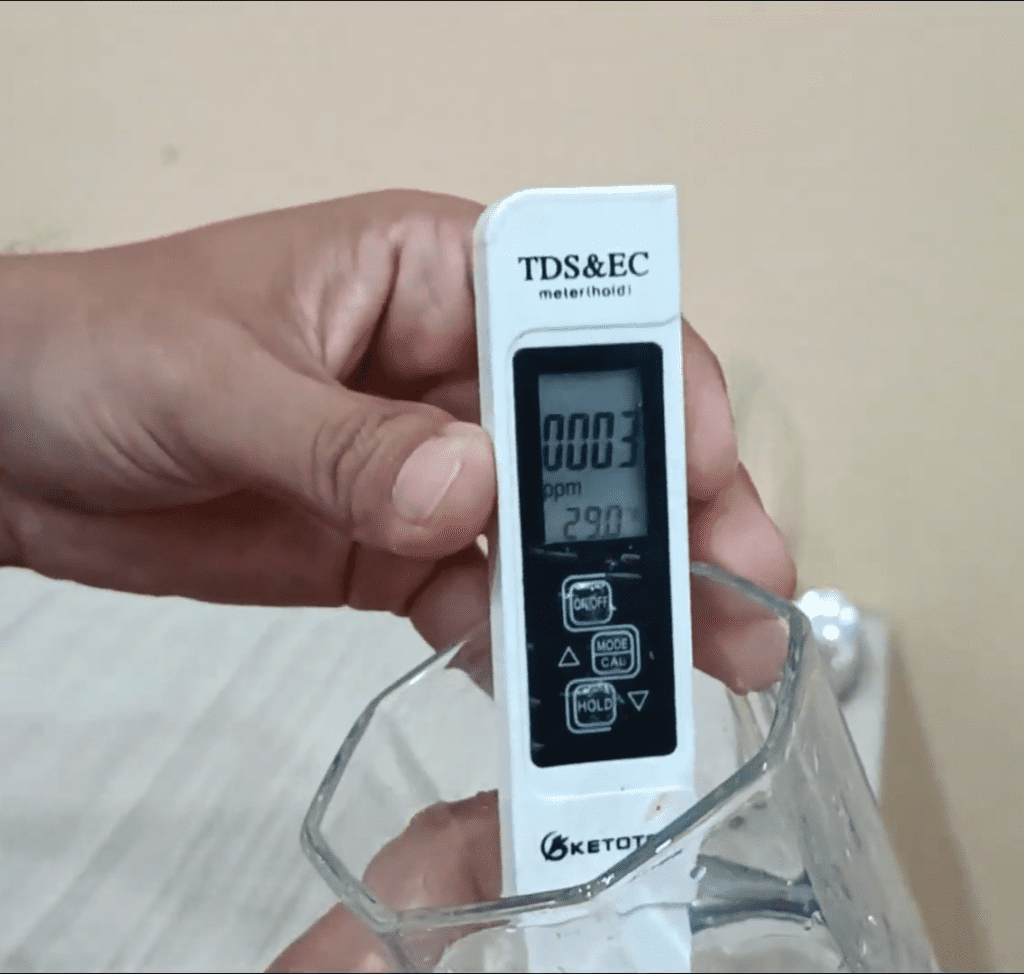
RESULT
The TDS of the sugar water solution was measured. The TDS measured were:
- TDS value of 3 for 0.5 grams of sugar in 50ml
- TDS value of 5 for 1.0 grams of sugar in 50ml
- TDS value of 8 for 1.5 grams of sugar in 50ml
These values were negligible for the actual values of the total dissolved solids in the water. Understanding TDS is as simple as understanding its name. Total dissolved solids in the liquid.
Suppose 0.5 grams of sugar is dissolved in 50 ml of the water. Then, the actual TDS is calculated as:
- 0.5 gram * 1000 = 500 mg sugar
- 50 ml water = 0.05 liters of water
- 500 mg / 0.05 Liter = 10,000 mg/liter = 10,000 ppm
The value of TDS is 10,000. (Note: 1 mg/l = 1 ppm = 1 TDS)
So, the actual TDS for 0.5, 1.0, and 1.5 sugar in 50ml of water will be 10,000, 20,000, and 30,000 respectively. The value measured by these meters is nearly zero, which means that adding sugar did not change in TDS value as measured by these TDS meters.
The reason for the TDS meter not measuring the dissolved sugar
A TDS meter works by measuring the electrical conductivity of the water. It then converts the conductivity value into a TDS value using a formula and displays the TDS.
The formula is:
TDS = Conductivity Value x 0.64
However, certain compounds like sugar, alcohol, and others have no electrical conductivity, so these TDS meters cannot measure the TDS of such substances.
Methods like evaporation or others are required to measure the actual TDS value of sugar content in water. You cannot simply trust the value shown by these digital TDS meters.
You can check out the actual experiment from this video below:
Salt Water TDS
We also dissolved 0.5 grams of salt in 50ml of water and made a salt solution. When measuring the TDS value of it, a value of 6200 TDS was measured. It should have been a TDS of 10,000, but some of the salt may have been undissolved. Thus, the decreased measurement. These Ionic compounds TDS can be easily detected by these meters.
We have a separate experiment where we created an artificial 5000 TDS water by using table salt and water. The video is shown below: