INTRODUCTION
The septic tank is a century-old technology that is widely used as a primary treatment of wastewater. It reduces the organics and the suspended solids present in the wastewater. The septic tank treats the wastewater to some degree and thus it needs further treatment in wastewater treatment or managed through soak pits or drain fields.
However, there are problems associated with the septic tank. It may not even fulfill its designed treatment. Some problems are design problems and others are operational problems. Today, we are going to see a problem of septic tanks in “Unsewered Urban Areas” in south asian countries like India, Nepal, Bangladesh, and others.
In urban areas, there should be centralized or decentralized wastewater treatment plants. However, these sophisticated centralized treatments need high capital investment. The decentralized treatment needs relatively less cost, but the land required is more that is often not available in these urban areas. Now, lets see the problems existing in those areas:
Also, Check Out: Urban Drain Practical Issues and Solutions
PROBLEM NO. 1: No Area for Soak Pits/Drain Fields
The effluent from the septic tank contains high polluting potential and is a carrier of pathogens. This should be managed with infiltration in soak pits/drain fields. However, in poor urban areas, there is no area available for a soak pit and people don’t want to keep the dirty water in their compounds. Generally, a side drain is present that carries the effluent wastewater to nearby barren lands or rivers. This is a high-risk situation for an outbreak of waterborne diseases especially during monsoon which is often the case. Many times the septic tank itself is made leaky, which acts as a soak pit that poses a risk of groundwater contamination.
PROBLEM NO. 2: The Septic Tank Fundamental Design
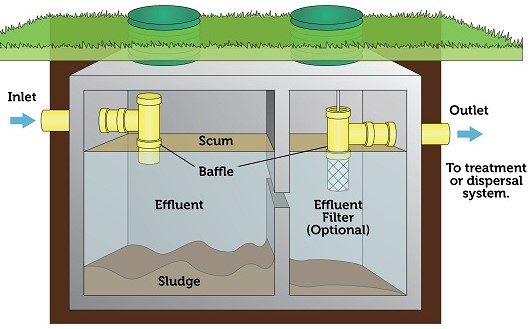
The septic tank is designed to handle around 80% of the total household water supply as wastewater. However, in these areas, only toilets (urine, feces, and flushed water) are connected to the septic tank, while other bathroom and kitchen faucets discharge directly into road drains. Even in sewered areas, there is a misconception, and only the septic tank effluent is connected to the sewer lines while the kitchen and bathroom water flows into side drains without any treatment.
This separate connection defeats the design of the septic tank which most of the time is designed to take total household wastewater. The sizing becomes inappropriately large and many houses don’t even see the effluent water from septic tanks. The effluents will also have a high polluting potential. With leakages in the septic tank and a low quantity of wastewater fed to the septic tank. Many tanks don’t even produce the effluent from the tank’s outlet. It becomes like a biogas plant and not a septic tank that works on a certain detention time (1-2 days).
There are also other problems with the design as average flow is not obtained and the problem of short-circuiting of wastewater. The design of the septic tank needs serious reconsideration in this case.
PROBLEM NO. 3: Desludging Time is Unknown
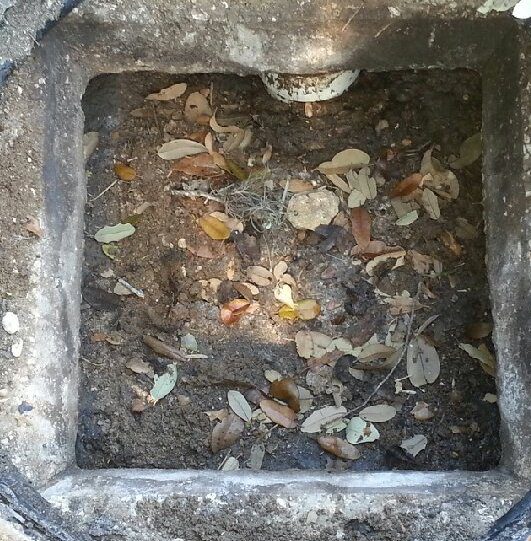
Ideally, the septic tank needs to be desludged when the sludge depth becomes 1/3rd of the liquid depth. This is determined from the designed desludging period which is ofter 2-3 years for households. However, with the separate connection and leakage as discussed in problem no.2, many septic tanks are not desludged even in a decade. The owner often requests desludging when visible fecal particles are seen from the tank’s effluents. At other times, the house owner requests desluding when the septic tank gets completely clogged. The septic tanks are often overused without desludging. The effluent produced will have more polluting potential in this case.
PROBLEM NO. 4: The drains need desludging and Stinking problem
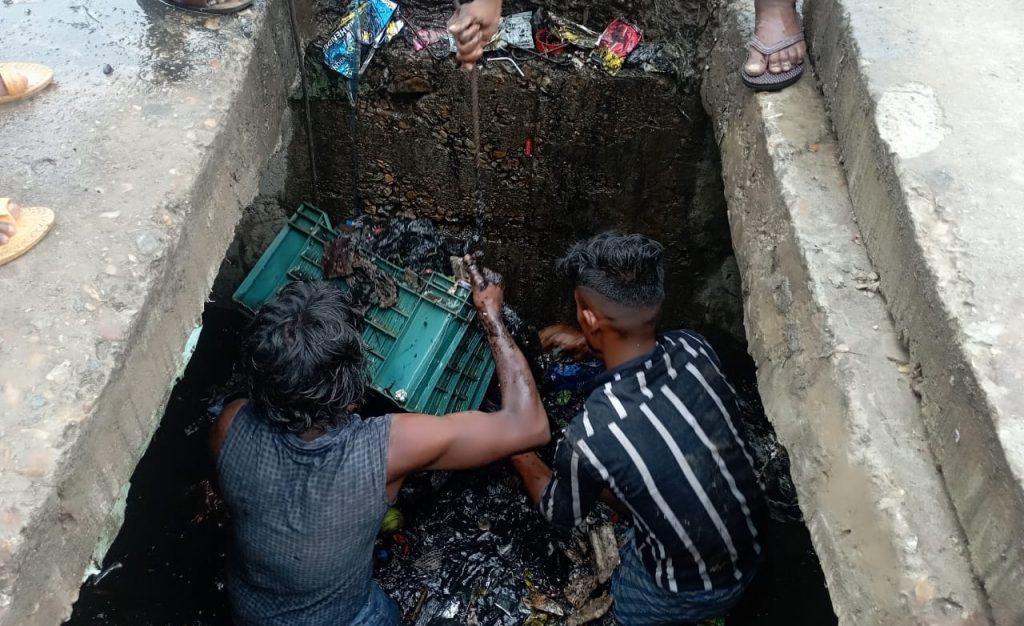
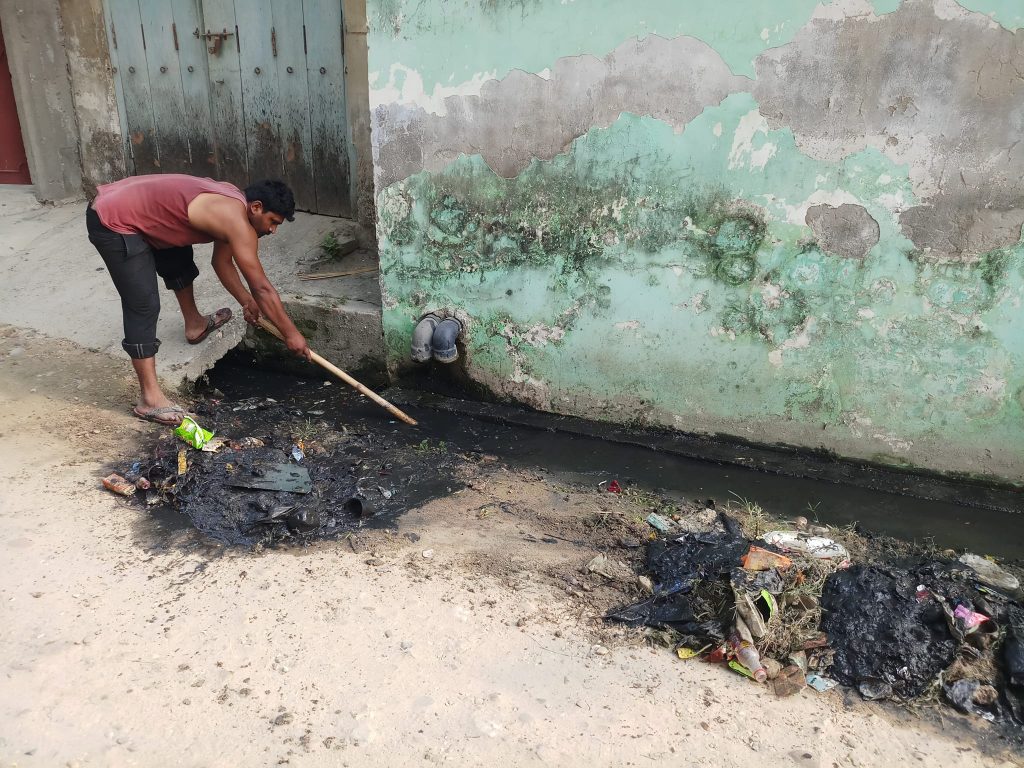
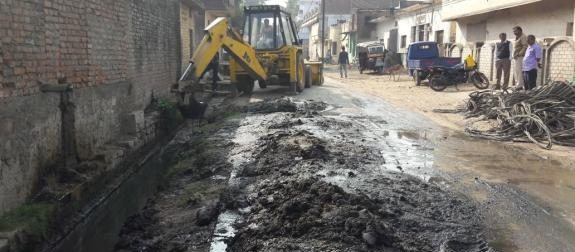
Without the septic tank effluent treatment in sewage treatment plants, there is an accumulation of septic sludge in drains which can be seen in Fig 1 and Fig 2. The anaerobic digestion starts to occur in these side drains, which causes sludge to build up and needs regular desludging. Bad and toxic odor creates an unhealthy living condition. With rain, these drains get flooded and spread several diseases in the whole community.
Along with solid waste and grit accumulation, these roadside drains need regular cleaning which is cost and labor-intensive and puts a burden on the municipal budget. Due to the sludge accumulation with septic effluent (anaerobic digestion makes the effluent liquid in soluble to black unsoluble form) and with a low gradient, the underground drains and RCC hume pipe get clogged often. Hence, in unsewered areas, the municipality often prefers a roadside drain (often not having a lid) for easy access to clean.
Also, Check Out: Online Drain Design
Discussion
The villages are transforming into semi-urban and urban areas which need their own sewage treatment plants. However, the sewerage systems need high construction and maintenance costs, and flatter areas need pumping of water at several points which adds an extra cost. Such transforming areas have tons of other issues. With limited resources, the government often chooses to solve an immediate issue leaving sewage treatment a secondary priority.
The problems discussed make the septic tank to not work as it is designed which creates a risky situation of pollution and the outbreak of diseases. In urban areas, the sewage treatment plant is a must as it is only a feasible solution. The contact of humans with untreated sewage should be prevented and treated to make it safe to be discharged into natural streams of water.
Conclusion
The working of septic tanks in unsewered urban areas seems flawed. It seems like the septic tank is present just to break the large feces particles into smaller and soluble particles. The potential of sewage to spread disease and to create a nuisance and a filthy environment should be realized. However, with the limited resources of a city, some cities simply may not afford a central wastewater treatment. Also, without land availability and budget, multiple decentralized treatments are also not possible. Alternative designs of septic tanks and innovative options should be studied for houses in urban areas to fully or partially manage the wastewater without a central wastewater treatment plant.
Check Out: “Easy Online Design of a Septic Tank “
Rakesh Shah (Civil and Environmental Engineer)
Author