I decided to examine the plastics I use every day, focusing on the types of plastic rather than the quantity. I made an effort to collect plastics from each category.
In case you’re not aware, not all plastics are the same. They are categorized from 1 to 7, each with varying recyclability values. Some are easily recyclable, while others are completely non-recyclable.

Let’s dive into the plastic I found I have been using.
Type 1: PET (Polyethylene Terephthalate)

PET plastic is a common type of plastic extensively used in many bottled packaging products, which are relatively thin. Polyester clothes are also made from PET plastic.
It is flexible, transparent or translucent, and has a very high recyclability value.
Products: Soda bottle, Sanitizer bottle, Supplement bottle, Pickle bottle, Hair oil bottle, Polyester cloth fabric
Type 2: HDPE (High Density Polyethylene)
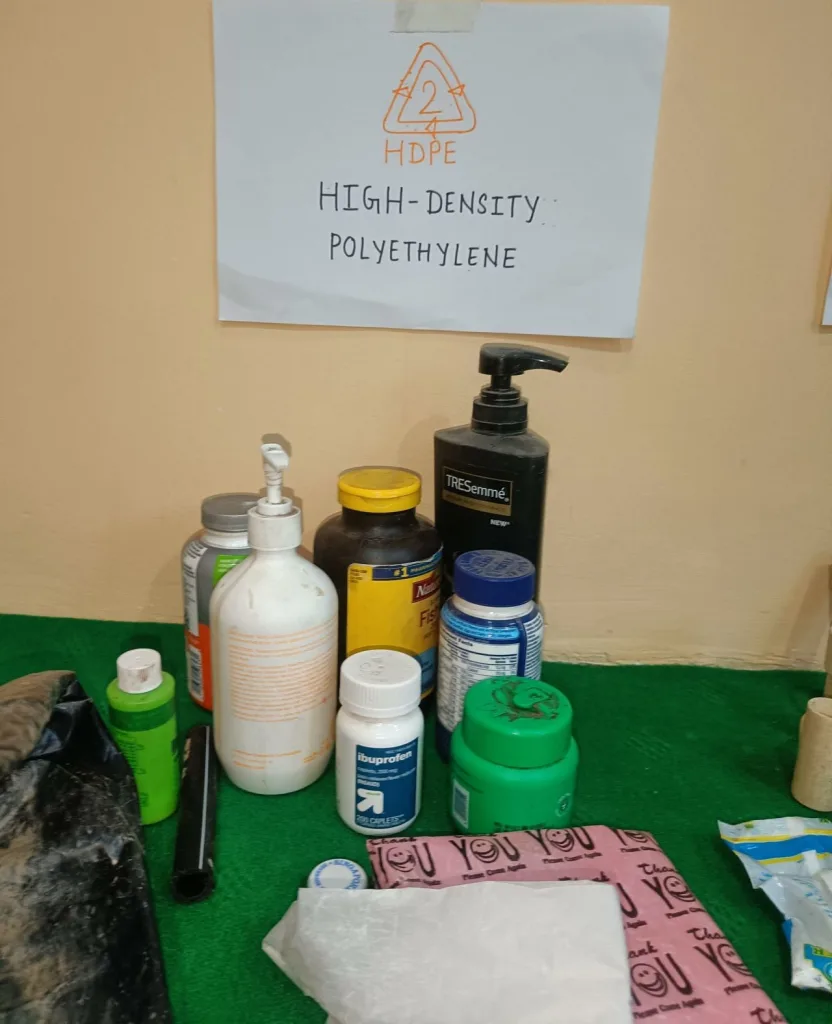
HDPE plastic is a common type of plastic used in various bottles and is generally thicker than other types of plastic. It is also used in thicker plastic bags that can be reused multiple times, making it a good alternative to reduce single-use plastics.
It is flexible and non-transparent and has great recyclable value.
Products: Pipes, Shampoo bottles, Supplement bottle, Hair oil bottle, Grow bags, Soda bottle caps
Type 3: PVC (Polyvinyl Chloride)

PVC plastics are also a common type of plastic, often used in inexpensive products. They are extensively used as a covering material for wires as an insulator. They are also used in piping, such as PVC pipes, as well as in other variants like CPVC (Chlorinated PVC) and UPVC (Unplasticized PVC).
They are never recycled and release black smoke when burned.
Products: Pipes and fittings, Wire insulation, ATM cards
Type 4: LDPE (Low Density Polyethylene)

LDPE is usually a thin type of plastic, mostly used as a single-use packaging material. It is transparent and very flexible, commonly found in inexpensive packaging products.
It is less recyclable than HDPE. Due to contamination and lower density, it gets recycled in smaller quantities, even though it is just as recyclable as HDPE plastic.
Products: Single use plastics packaging, Bubble wrap, Saline bottles
Type 5: PP (Polypropylene)

Polypropylene is a type of plastic extensively used in kitchens, medical items, and other applications. It is less flexible and more brittle. However, it has a shiny texture and feels like a premium product.
It has a high recyclability value and is also sold at a relatively higher price point.
Products: Kitchen containers, Syringe, Vicks box, Marker pen, pencil sharpener, medicine bottle, multivitamin bottle, disposable spoon
Type 6: PS (Polystyrene)

Polystyrene is commonly known as Styrofoam. Typically, PS is recognized as expanded polystyrene, which is a good shock absorber and extremely lightweight. However, there is also a high-density variant known as high-impact polystyrene (HIPS).
Polystyrene is not recycled and releases toxic fumes when burned.
Products: Yoghurt cups, Cycle helmets, Packaging foam
Type 7: Other

Type 7 and other types of plastic include all plastics that do not fall into the other six categories. They contain nylon, polycarbonate, Acrylonitrile Butadiene Styrene (ABS), MLP, and various other materials.
Since they encompass a wide range of products, from electrical items to toothbrush bristles, they need to be considered separately.
Electrical products are brittle and resistant to catching fire. Nylon also has diverse applications, from ropes and clothing to sports equipment. Most of these plastics go unrecycled.
Products: Toothbrush bristle, Shoe brush, TV remote, Nylon rope
Conclusion
I hadn’t realized just how many types of plastic I use in my daily life until now. This awareness has helped me understand the extent of my plastic consumption and the vital role plastic plays in modern living.

Plastic has become deeply integrated into our lives, and finding non-plastic alternatives can be challenging. The key is to reduce single-use plastics while maximizing reuse. The “Reduce, Reuse, Recycle” (RRR) principle remains important, but recycling is not always a viable solution, as not all plastics are recyclable.
Even if a product bears the recycling triangle symbol, it does not guarantee recyclability. The increasing use of multiple layers of plastics as MLP (multilayer plastic) packaging further complicates the recycling process.

MLP, or Multilayered Plastic, falls under Type 7 plastic. It consists of multiple layers made from different types of plastic, or a combination of plastic, aluminum, and even paper. These layers are extremely difficult to separate, making recycling a major challenge in the industry.
While plastic harms our planet, we cannot ignore the fact that it has also saved countless lives and made everyday tasks easier. The challenge is not just eliminating plastic but learning how to coexist with it responsibly. Until better and more viable alternatives emerge, plastic will continue to surround us—even in places we least expect, such as microplastics found in our blood, heart, and brain.
Perfectly explained
Thank you for your wonderful comment 🙂