Intro
Solid waste management is a growing concern, particularly in urban areas worldwide. The massive production and accumulation of solid waste pose significant challenges for municipalities. Mostly, the management of solid waste is a responsibility of the local government in most parts of the world.
Not only is solid waste an environmental issue, but it is also a social problem as it cannot be managed near communities. Solid waste piles are unpleasant to observe and often emit foul odors. There are economic reasons like decreased land value near landfill areas. Moreover, it is a health hazard, endangering soil and water sources. Effective municipal solid waste management is critical for addressing these issues.

One of the byproducts of solid waste accumulation is a dark black liquid called leachate. Leachate is produced by the decomposition of organic waste over time, and it also includes rainwater and other water discharged from solid waste. This leachate can pollute the land, water bodies, and even groundwater.
Leachate Definition: Leachate is the liquid that percolates (leaches) through solid waste, extracting dissolved and suspended impurities.
Solid Waste Management Status
Waste disposal practices are income dependent. In low-income countries, about 93% of waste is disposed of through open dumping. Generally, the composition of waste is 70% organic and 30% inorganic meaning that most of the household solid waste is organic in nature, hence biodegradable. This composition varies with community, country, and with economic status, with a higher fraction of inorganic solid waste in higher-income communities.
The most common method of managing solid waste globally is sanitary landfilling, where around 90% of produced waste is disposed in ill managed landfills, with only 10% being recycled. Other waste management options include incineration and composting.

Integrated solid waste management combines various methods, including sanitary landfilling, and involves phases from waste generation to landfilling. Sanitary landfills have an impermeable membrane underneath and a system of pipes that lead to a leachate holding tank. The leachate should be prevented from contact with water and soil as it will seriously pollute them. Thus, it needs to be treated before releasing it anywhere.
Leachate Treatment Methods
Leachate produced from landfills is highly concentrated in pollutants and often contains many carcinogens like heavy metals. Therefore, it requires high-level treatment, nearly similar to domestic sewage treatment. The age of the landfill affects the leachate’s polluting potential; older landfills have lower polluting potential than younger ones. Factors such as rainfall and the composition and type of waste also influence leachate quality, making leachate treatment design complex.
Commonly Utilized Leachate Treatment Methods
Middle and low-income countries often struggle to construct and operate sanitary landfills due to land availability problem and with problem of social issues. Managing leachate from landfills is particularly challenging, especially with rainwater involvement. Common leachate treatment methods include:
- Co-treatment with municipal sewage treatment
- Recirculation of leachate into the landfill
- Leachate evaporation
Co-treatment with municipal sewage treatment
The leachate has mostly biodegradable components which is similar to that of the domestic sewage. The leachate can be mixed with municipal sewage network and can be treatment in a common sewage treatment plant. However, there is a risk of heavy metals and other carcinogenic compounds reaching into the sewage treatment plant, which might be dangerous.
Recirculation of Leachate
Recirculation involves returning the leachate produced in a landfill back into the same landfill for biological decomposition. This process enhances biological activity in the landfill, increasing biogas (methane and carbon dioxide) production, which can be harnessed for energy. The pH rises, causing dissolved metals and heavy metals to precipitate out, trapping harmful carcinogens within the landfill itself.
Problems with Leachate Recirculation: A Case of Kathmandu, Nepal
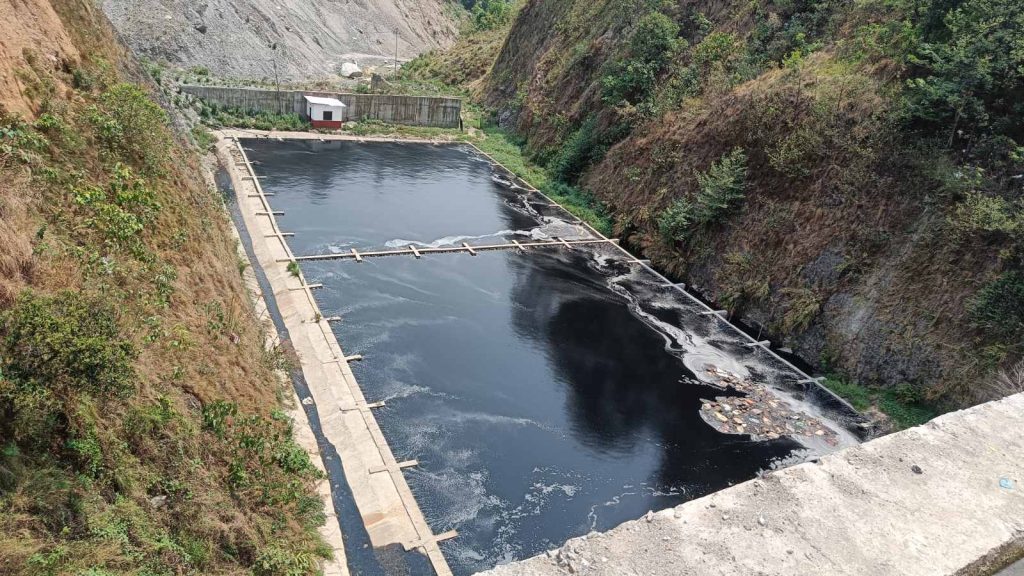
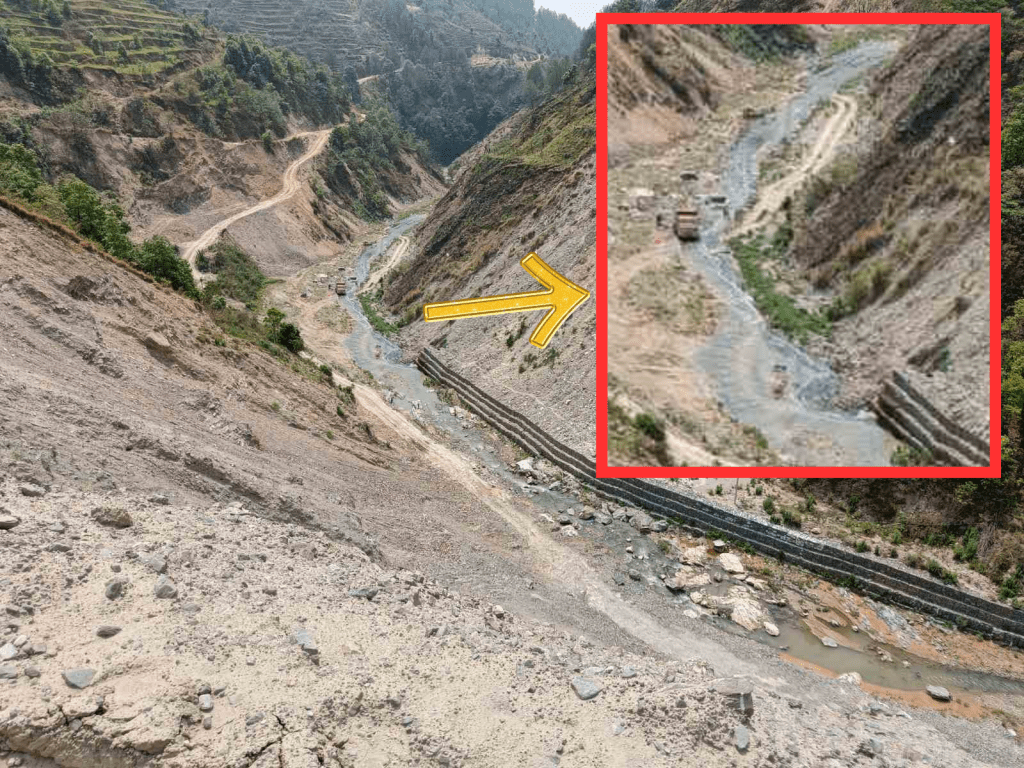
The Bancharedada landfill in Nepal uses leachate recirculation for treatment. However, the leachate pond frequently overflows, releasing leachate into nearby rivers, even during the dry season. This issue is exacerbated during the monsoon season, indicating that recirculation alone may not be feasible. Alternative physical or biological treatment methods are essential to supplement recirculation method of leachate treatment.
Leachate Evaporation
Leachate evaporation involves drying leachate in large evaporation ponds and spraying the remaining leachate on the landfill surface to evaporate. This method is problematic in high rainfall areas, as large pond areas need to be covered with liners, and odor issues may arise. This technique is suitable for areas with hot summers and low rainfall.
Complex forms of leachate treatment:
When recirculation and evaporation are not feasible, leachate must be treated using physical, chemical, and biological methods. These are more complex methods and generally more costlier which are summarized in the table below:
| Physical Method | Chemical Method | Biological Method |
| Sedimentation | Neutralization | Activated Sludge |
| Filtration | Precipitation | Sequential Batch Reactors |
| Air Stripping | Oxidation | Aerated Stabilization Basins |
| Adsorption | Coagulation/Flocculation | Fixed Film Reactors |
| Ion Exchange | Anaerobic Lagoons | |
| Ultrafiltration | Nitrification/Denitrification | |
| Reverse Osmosis | Constructed Wetlands | |
| ANAMMOX |
A combination of these treatment options is generally suitable for leachate treatment. Leachate treatment is necessary not only during the active landfill years but also for decades after the landfill’s closure.
Leachate Treatment Plant: A Case of Birgunj, Nepal

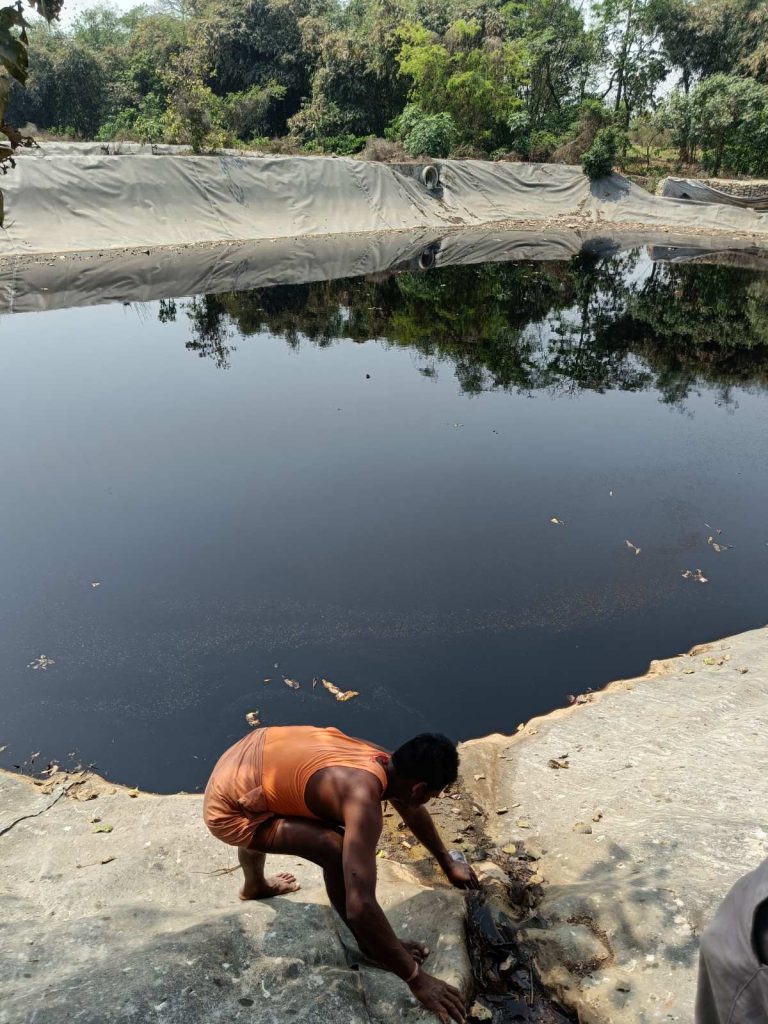
The sanitary landfill of Birgunj Metropolitan City in Nepal uses a waste stabilization pond system for leachate treatment, consisting of anaerobic, facultative, and maturation ponds in series. However, these ponds alone cannot treat the high biological oxygen demand of the leachate. Additional treatment methods, such as leachate recirculation, are required.
Furthermore, the landfill lacks a sufficient impermeable soil cover, allowing rainfall to contribute to additional leachate formation. The landfill lacks a methane collection system which cause release of methane which is 25 times more potent greenhouse gas than carbon dioxide.

Rakesh Shah (Civil and Environmental Engineer)
Author