What is Hospital Waste/ Biomedical Waste?
Hospital waste or Biomedical waste is harmful waste produced and discharged by
- Hospitals
- Clinics
- Pathological labs
- Pharmaceutical industry
- Diagnostic center
Why does Hospital waste need to be managed differently?
These wastes are different from general waste as they contain chemicals, and harmful pathogens which can have a short as well as long-term impact on health and the environment. There is a huge risk with this type of waste and it needs to be managed properly in a safe manner for its treatment and final disposal.
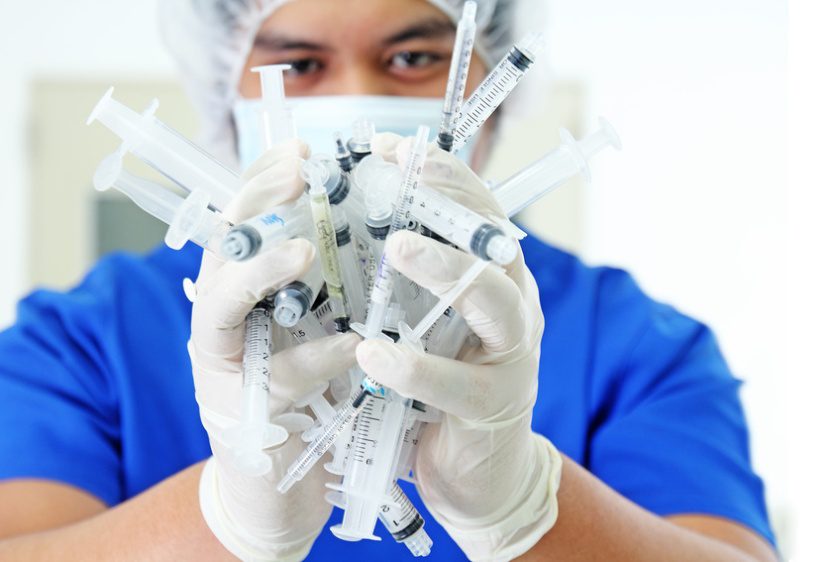
Hospital waste management basic principle
The main principles of hospital waste management are:
- Segregation at source
- Collection and storage
- Transport
- Treatment
- Disposal
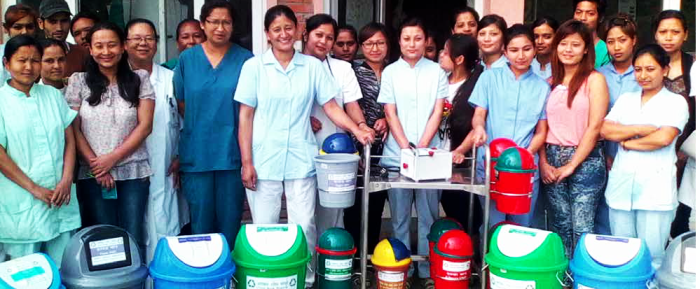
Condition of hospital waste management in Nepal
- Only 1% of basic healthcare waste management services are estimated to be available in Nepal and around 40% have no service while the rest have limited service (WHO).
- It is estimated that only 5% of healthcare waste is safely segregated in Nepal (DoHS).
- The current trend of healthcare waste disposal in Nepal is either burn or bury method without any disinfection where 60% of big hospitals use municipal waste disposal system (DoHS).
- Most using municipal waste disposal for their hospital waste is a risky scenario.
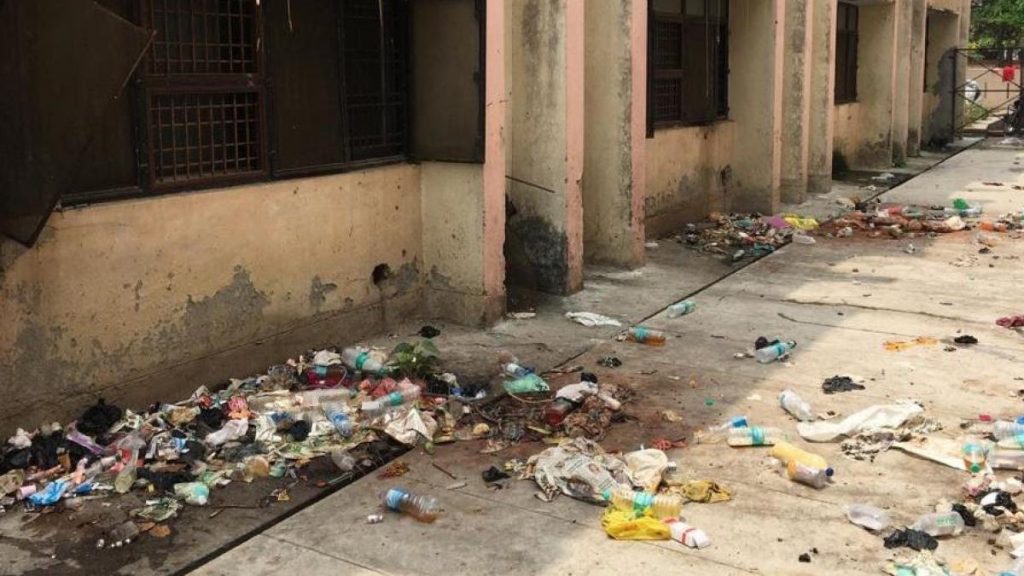
The risks of hospital waste
The persons involved in hospital waste management should be given Hepatitis B and Tetanus injections and use Personal Protective Equipment (PPE) at all times. Other risks associated are:
- Infectious waste and sharps: Gastroenteric infections, Respiratory infections, Ocular infections, Genital infections, Skin infections, Anthrax, Meningitis, Acquired immunodeficiency syndrome (AIDS), Hemorrhagic fevers, Septicemia, Bacteremia, Candidemia, Viral hepatitis A, Viral hepatitis B and C, etc. (WHO).
- Chemical and pharmaceutical waste: These types of wastes have several hazardous properties which are toxicity, corrosivity, explosivity, flammability, and chemical reactivity.
- Hazards from genotoxic, cytotoxic waste: The genotoxic, cytotoxic waste has mutagenic, teratogenic, or carcinogenic properties.
- Hazards from radioactive waste: Radioactive wastes can cause headaches, dizziness, and vomiting to serious health problems such as the effect on genetic materials.
- Hazards from healthcare waste treatment methods: Healthcare waste treatment methods can lead to water contamination, occupational risks, and the release of carcinogenic pollutants like dioxins and furans. Incineration can also spread heavy metals into the environment, posing long-term risks.
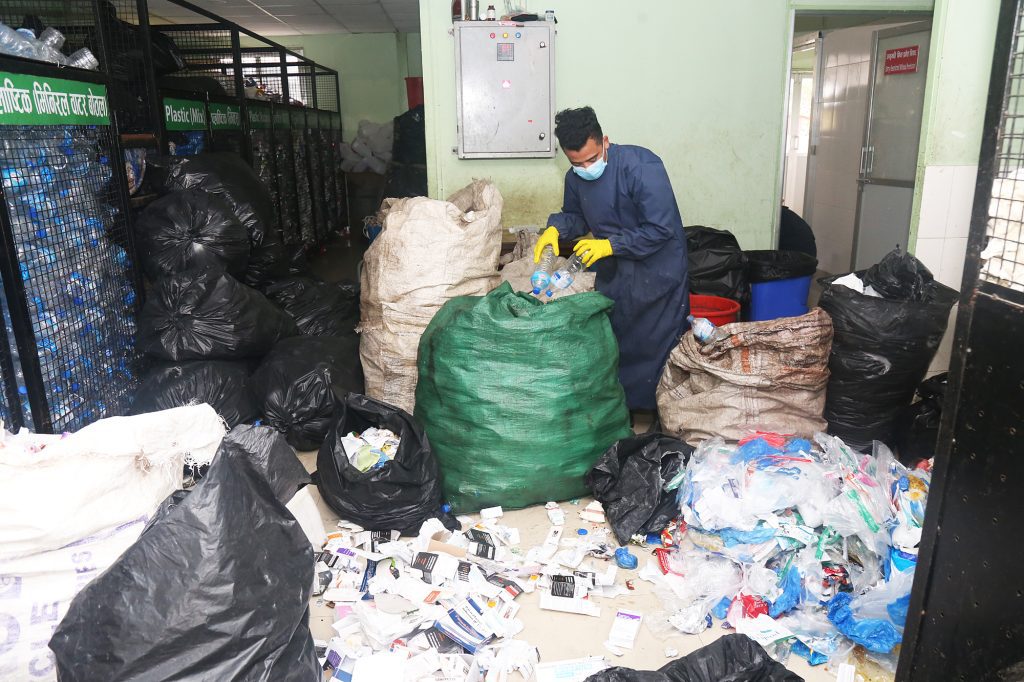
Guidelines to management of Hospital waste in Nepal
The health care waste management standard indicates the procedure to handle the hospital waste. These cover the phase from waste production to disinfection and final disposal with a no-burn method.
Type of hospital waste
The hospital waste includes a general category of non-risk waste and risk waste.
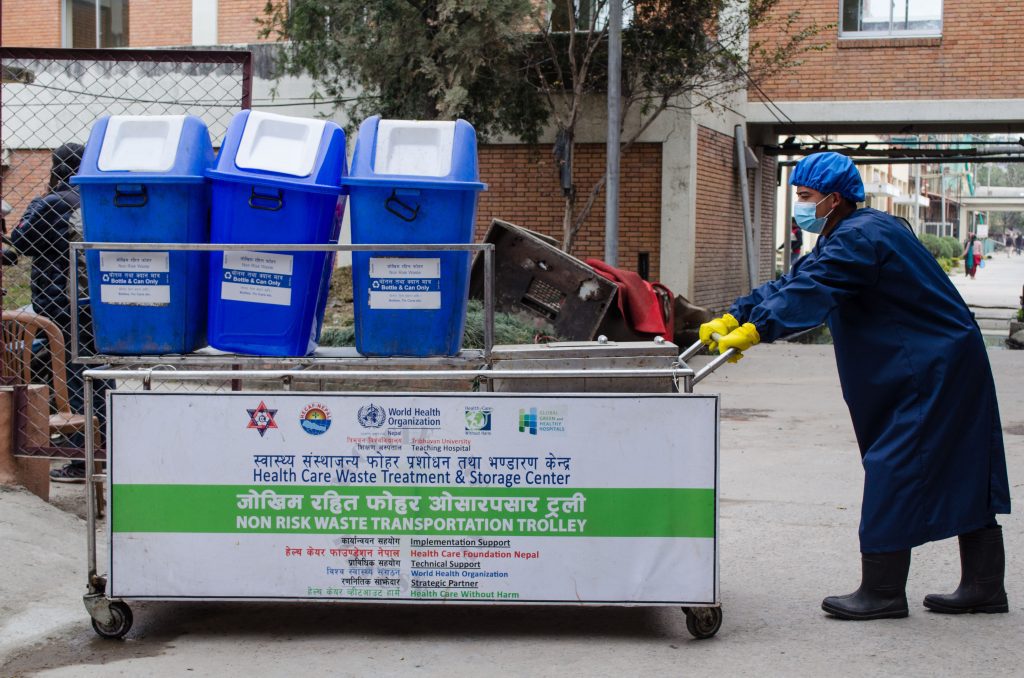
- Non-Risk waste: The non-risk waste contains general organic waste and inorganic recyclable waste. The general waste if properly segregated at source needs no treatment and can be handled like any municipal waste.
- Risk Waste: This includes contaminated general waste, infectious waste, pathological waste, sharp objects, and pharmaceutical waste (general and cytotoxic). These need special attention and need to be treated before disposal
Segregation color coding
The hospital waste needs to be segregated at the source with dedicated color-coded waste bins. These make waste handling easy and reduce the waste that needs to be treated. This is because the non-risk waste comprises majority almost 70% of the total hospital waste which needs no treatment and 30% of hospital waste is risky which needs treatment.
| Color of container/Bin | Waste category |
| Green | Non-risk waste biodegradables |
| Blue | Non-risk waste recyclable |
| Red | HCW requiring special attention (Infectious, pathological, sharps, pharmaceutical, Cytotoxic) |
| Yellow | Hazardous Chemical Waste |
| Black | Hazardous Radioactive waste |
Hospital waste treatment and disposal methods
The hospital waste needs to be properly treated and disposed. The standard method which needs to be adopted are summarized below:
| Waste Categories | Waste Types | Treatment Methods |
| General/non risk waste | Organic and inorganic general waste | Waste recovery and landfill |
| Infectious Waste | Waste contaminated with blood and other body fluids; laboratory cultures and microbiological stocks and others | Autoclave/Microwave/Frictional heat based. OR Chemical disinfection |
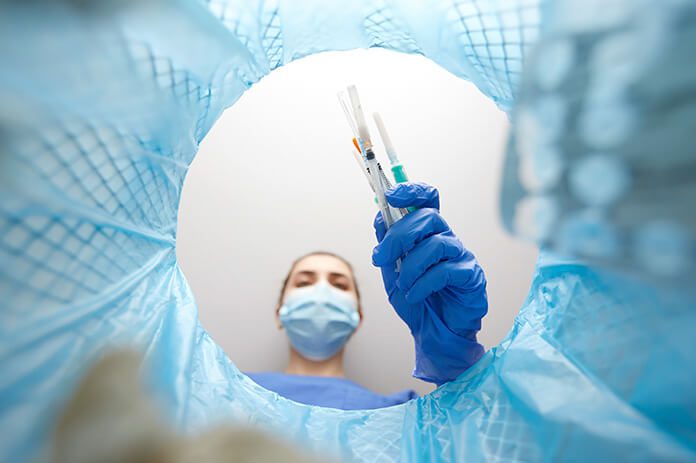
| Sharp Waste | Needles, glass syringes with fixed needles, scalpels, blades, glass, etc. which may cause punctures and cuts. | Cut with a needle cutter at source, then: Autoclave/ Frictional heat-based OR Encapsulation OR Fill in a Septic concrete vault |
| Pathological Waste | Human body parts, organs, human tissues, removed organs, amputated parts, bone marrow. | Placenta pit OR Biodigester |
| Chemical Waste | Waste with high content of heavy metals, such as batteries, pressurized containers, organic and inorganic chemicals | Return back to manufacturer policy OR Encapsulation OR Inertization |
| Pharmaceutical (General) | Unused and date-expired drugs Waste with anti-neoplastic effects such as alkylated substances, anti-metabolites, antibiotics, plant alkaloids, hormones, etc. | Return back to manufacturer policy OR Encapsulation OR Inertization OR Alkaline hydrolysis |
| Pharmaceutical (Cytotoxic Waste) | Waste Substances that are toxic to cells (genotoxic properties). These substances can damage or kill cells, particularly cancer cells, and are commonly used in chemotherapy treatments. | Return back to manufacturer policy OR Encapsulation OR Inertization OR Neutralization, Detoxification, Chemical reduction or oxidation, Hydrolysis and others |
| FINAL DISPOSAL | AFTER NECESSARY TREATMENTS | CAN BE TREATED THE SAME AS MUNICIPAL WASTE |
Technical Process Terms:
- Autoclaving: It is a process used to sterilize equipment and materials by subjecting them to high-pressure steam at temperatures above 100°C (212°F). This kills bacteria, viruses, fungi, and other microorganisms.
- Biodigestion: It is a process of producing biogas which is a mixture of methane and carbon dioxide gas which digestion of organic materials in low oxygen environment.
- Encapsulation: It is a process in which objects are filled in a vessel/bucket and then filled partially with concrete or inert materials and sealed and landfilled to make them harmless.
- Inertization: Process of making hazardous substances safer by reducing reactivity or rendering them inert such as mixing with concrete.
- Septic Concrete Vault: It is a concrete pit in which the sharp objects are filled and completely sealed after it is filled.
- Alkaline Hydrolysis: Alkaline hydrolysis of biomedical waste is a method that uses heat, pressure, and alkaline chemicals (such as potassium hydroxide or sodium hydroxide) to break down organic materials into basic components, offering an alternative to traditional disposal methods like incineration/autoclaving.
Laws and regulations guiding the hospital waste management
There are a load of laws and regulations which guides the overall waste management and also include the healthcare waste management/ hospital waste management in Nepal.
- National Policy
- Constitution of Federal Democratic Republic of Nepal
- Solid Waste Management Act, 2068 (2011)
- Solid Waste Management Rule, 2070 (2013)
- Environment Protection Act, 2076 (2019)
- National Environment Policy, 2076 (2019)
- Environment Protection Rules, 2077 (2020)
- Fifteenth Periodic Plan, 2076/77 – 2080/81 (2019/20-2023/24)
- Public Health Service Act, 2075 (2018)
- Local Level Solid Waste Management Acts
- Local Government Operation Act, 2074 (2017)
- National Health Policy 2076 (2019)
- Urban Health Policy 2072
- Nepal Health Sector Strategy Implementation Plan
- The Labor Act, 2074 (2017)
- Security of the Health Workers and Health Organizations Act, 2066 (2010)
- The Infectious Disease Act, 2020 (1964)
- Guiding Principles
- Guideline regarding the establishment, operation & upgrade of health institutes, 2070 (2014)
- Healthcare Waste Management Standards 2077(2020)
- Healthcare Waste Management Guideline (2014)
- International Agreements and Conventions
- Basel Convention on the Control of Transboundary Movements of Hazardous Wastes and Their Disposal (1989)
- Stockholm Convention on Persistent Organic Pollutants (2001)
- UN Human Rights Council
- The Dhaka Declaration on Waste Management (2004)
Hospital Waste Management in Birgunj
Birgunj Metropolitan City has a Central Treatment Facility for healthcare waste / Hospital waste management.
Rakesh Shah (Civil and Environmental Engineer)
Author