Introduction:
In recent years, there has a much debate on the potential effects of aluminum on health especially neurological conditions such as Alzheimer’s disease and dementia. Its major effects are loss of memory, thinking, and decision-making ability (b).
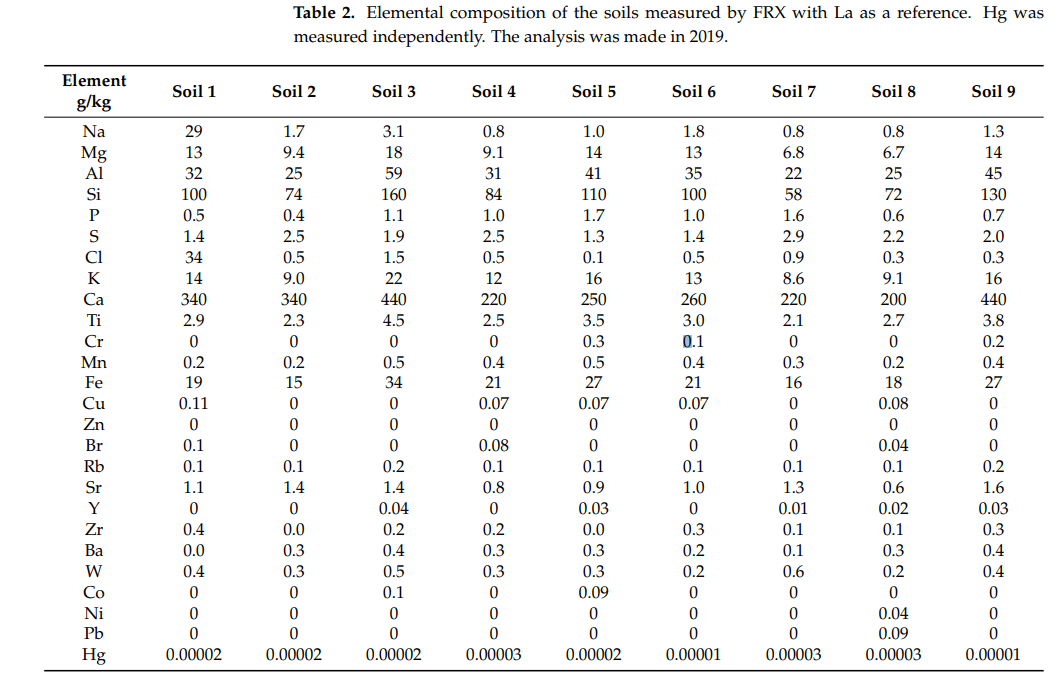
Aluminum is 3rd most abundant element (~8%) of the earth’s crust. It is everywhere from soil to cookware, food that we eat, and also in water that we drink due to alum. It is also present in food packaging, and medicines like antacids.
In this article, we look into what data and science tell us about aluminum and health linkage.

Aluminum in Treated Drinking Water
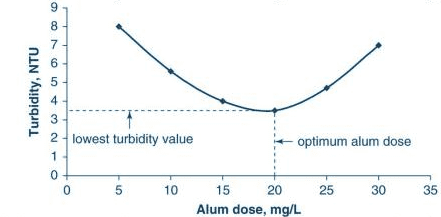
In water treatment, coagulation is done to reduce the turbidity or murkiness of water. This is done with the use of coagulants which are mostly based on aluminum and iron salts. Natural coagulants like moringa Olivera seeds are also effective.
The most used coagulant is alum due to its being cheap and for its desired properties. However, some aluminum will remain in the treated water also. Figure 1 shows its typical content.
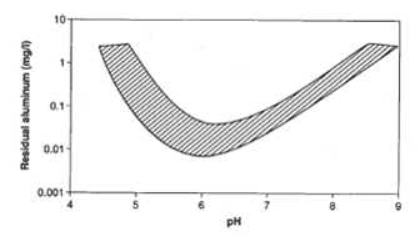
From Figure 1, it is seen that the aluminum in treated water is least in the drinking water pH range. The acidic and alkaline water has more aluminum solubility. The acid rain can also increase dissolved aluminum in water sources and soils.
In a water treatment study, the treated water had a wide range of aluminum content from 0.001 to 0.459 mg/liter(c). Another study states that the risk of dementia is higher when the concentration exceeds 0.1 mg/liter in drinking water (e). WHO states that aluminum to be less than 0.2mg/l in drinking water.
It is seen that aluminum intake from food is much larger than from drinking water.
Aluminum in food
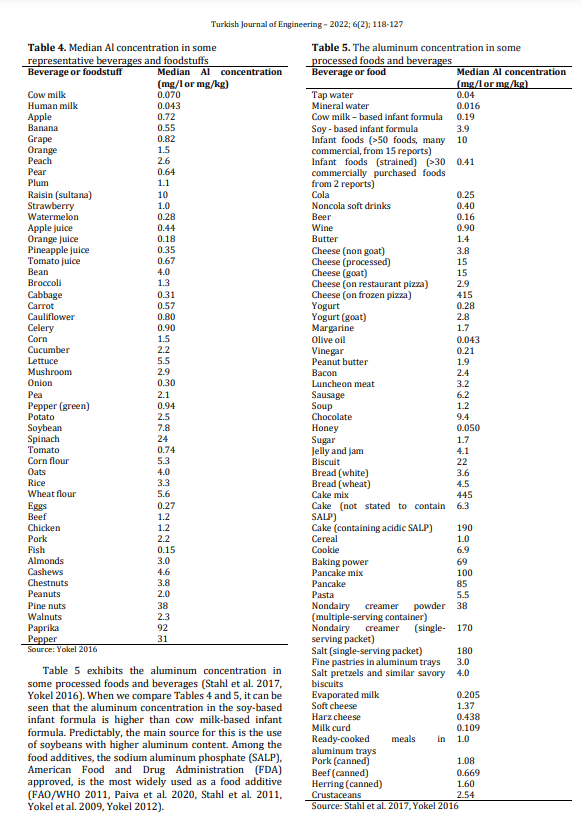
Aluminum is present in all soil-grown plants, meats, and fishes. It also comes from cooking in aluminum utensils, especially acidic foods. Generally, the foods have an aluminum content of 5 to 10 milligrams per kilogram of food.

However, not all aluminum intake ends in your body as it is mostly filtered out from urine. The body needs minerals like iron, magnesium, and others but aluminum has no known use for the human body.
According to a standard, an adult of 70kg can be allowed to take 70mg per week (d). The average adult consumes nearly 4.8 mg/day or 33.6 mg/week which is safe.
Aluminum and Alzheimer’s disease
Alzheimer’s patients have 2-3 times more aluminum found in their brains when compared to a healthy person. A study finds that a person who consumes more aluminum has twice the risk of developing Alzheimer’s disease(d).
There is however not a conclusive study on the linkage between Alzheimer’s and aluminum. Some research finds a strong correlation and others find no correlation.
Most study relates a high dose of aluminum to cause Alzheimer’s disease which accumulates in the brain (b). A study found that aluminum absorption is more with increasing age (c).
Conclusion
The research has still to reach a common viewpoint on the negative sides of aluminum and health. However, it is almost certain that aluminum in higher doses negatively affects health. So, is better to decrease aluminum consumption if possible.
What to Do:
- Prefer stainless steel utensils over aluminum
- Minimize acidic food intake
- Check water quality
- Prefer low aluminum-containing foods

DATA:
Reference:
- https://www.iwapublishing.com/news/coagulation-and-flocculation-water-and-wastewater-treatment
- https://www.medicalnewstoday.com/articles/does-aluminum-cause-alzheimers
- https://www.ncbi.nlm.nih.gov/pmc/articles/PMC2215380/
- https://dergipark.org.tr/tr/download/article-file/1466857
- https://pubmed.ncbi.nlm.nih.gov/2562879/
- Characterization of Technosols for Urban Agriculture