
Rakesh Shah
Civil and Environmental Engineer
AUTHOR
The Constitution of Nepal, Article 35(4),2015 makes access to clean and safe drinking water as a fundamental human right. The UN sustainable development goal also targets by 2030, universal and equitable access to safe and affordable drinking water.
However, the central Terai of Nepal, especially the area of Birgunj experienced massive hand pump failures across the entire city in 2023 (Acharya, 2023) (Patel,2023) (Samiti, 2023). No one expected it to happen and the city was ill-prepared which caused havoc in the city with a massive water shortage in the dry season. For most people, the reason was unknown, and did not know how and when it would end. The hand pump began to operate and the crisis ended a few months after the monsoon rainfall.
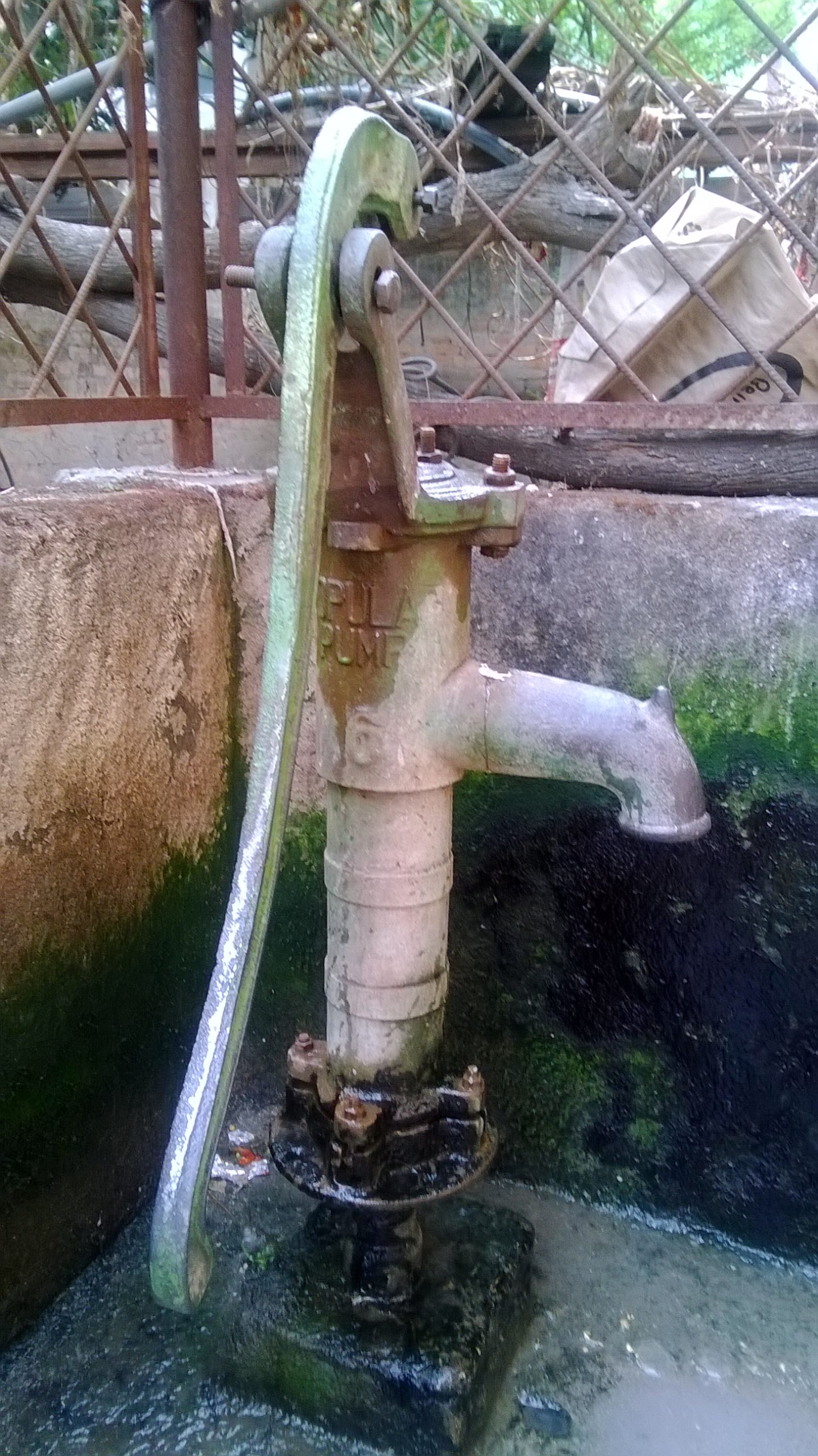
Figure: Model No.6 hand pump used in Birgunj
Now, the real question is: Will this repeat in next summer and is this the end of the hand pump in Birgunj? What are the solutions?
The real reason for the hand pump failure is that the hand pumps had failed in suction. The No.6 hand pumps are the most common in Birgunj, which works on the principle of suction. The centrifugal electric pumps (Commonly known as Motor) that are also used along with hand pumps work on the suction principle. The atmospheric limit is the theoretical suction limit which is near 34 feet of water head and decreases with several factors. It is seen that the hand pump and the electric pump both failed simultaneously, creating a no-availability water situation.
Birgunj Metropolitan City, situated in the Terai region of Nepal, experiences a monsoon system from June to September, with 80% of the annual precipitation occurring during this period (Gautam & Regmi, 2014). The Chure Bhabhar area is considered as the main recharge zone for groundwater in Terai and annual precipitation greatly influences the water recharge in highly transmissive aquifers of Terai.
The water table rises post-monsoon and falls during the pre-monsoon dry season (Shrestha, Tripathi, & Laudari, 2018), creating challenges in maintaining a consistent water supply throughout the year. The city faces high water demand, particularly in densely packed urban areas, leading to extensive water extraction. Heavy extraction of water is also done for Irrigation purposes through large-diameter boreholes in agricultural fields in Terai. The sustainability of hand pumps in Birgunj is a significant concern due to seasonal fluctuations in the groundwater table, where maintaining the practical suction limits is crucial for their continuous operation.
In Birgunj, the community relies on groundwater to meet its water demand, utilizing manual hand pumps, motorized suction pumps, and submersible pumps. Hand pumps and motors draw water from confined aquifers through long pipes, often up to 250 feet (76.2 meters) in length, leading to lower suction limits. Field studies indicate that hand pumps fail to operate beyond 31.0 feet of suction head and very low discharge is obtained near suction limits. The failure of hand pumps and high fluctuations of the groundwater table recorded showed a serious issue in the study area.
To ensure the sustainability of hand pumps, they should be installed where the groundwater table lies within practical suction limits which are lesser than the maximum suction limit possible. This is because the discharge becomes very low near the maximum limits, whereas the hand pump should be able to draw water near its full volumetric efficiency.
The static water table in Birgunj fluctuates significantly throughout the year, often falling below the practical suction limits and even below the maximum suction limits, leading to hand pump failures and water scarcity issues, especially during the dry season.
Birgunj’s geological structure consists of an unconfined upper layer, which is typically contaminated and unsuitable for drinking purposes (Mueller, 2019), and multiple confined aquifers at greater depths, separated by confining clay layers (Shrestha, Tripathi, & Laudari, 2018). These confined aquifers are extensively used for household water supply through boreholes with PVC and HDPE pipes, resulting in high water extraction from these sources.
A comprehensive trend analysis of groundwater fluctuation is essential to assess the sustainability of hand pumps in Birgunj effectively. Unfortunately, such data is currently lacking due to a shortage of groundwater monitoring stations and studies conducted by stakeholders. To address this, extensive and continuous monitoring of the static water table from confined and unconfined aquifers is necessary to understand the groundwater fluctuation scenario through trend analysis and identify critical areas similar to studies conducted in Bangladesh in Figure 1 (Mojid, Parvez, Mainuddin, & Hodgson, 2019).
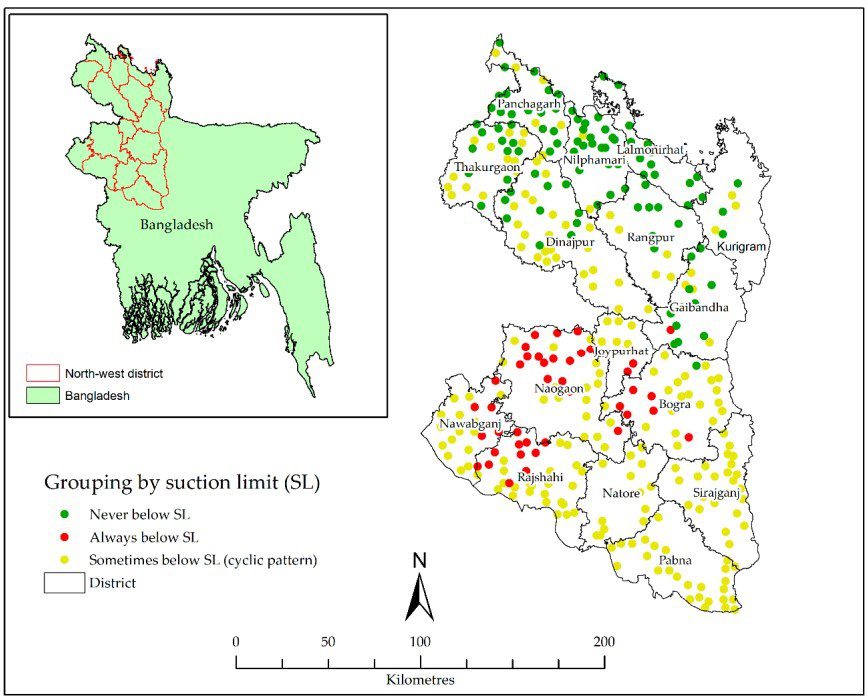
Figure 1: Grouping based on suction limit of North West of Bangladesh
Moreover, in Terai regions like Birgunj, there is a risk of urban inundation during floods due to poor drainage and river overflow. As a result, constructed roads and houses are elevated, which increases the suction head at the upper end where hand pumps are installed, exacerbating the situation as depicted in Figure 2. Therefore, considering the sustainability of the static water table not only from the natural groundwater level but also from the plinth level of houses is crucial. Raising the plinth height by one foot is equivalent to lowering the water table by one foot, as it increases the suction head for hand pumps in both cases.
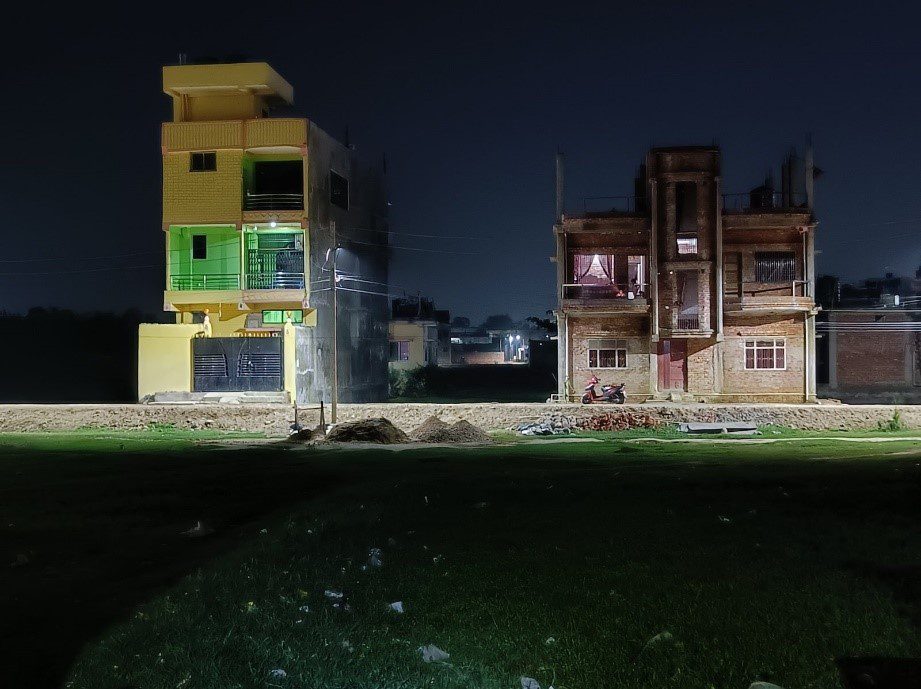
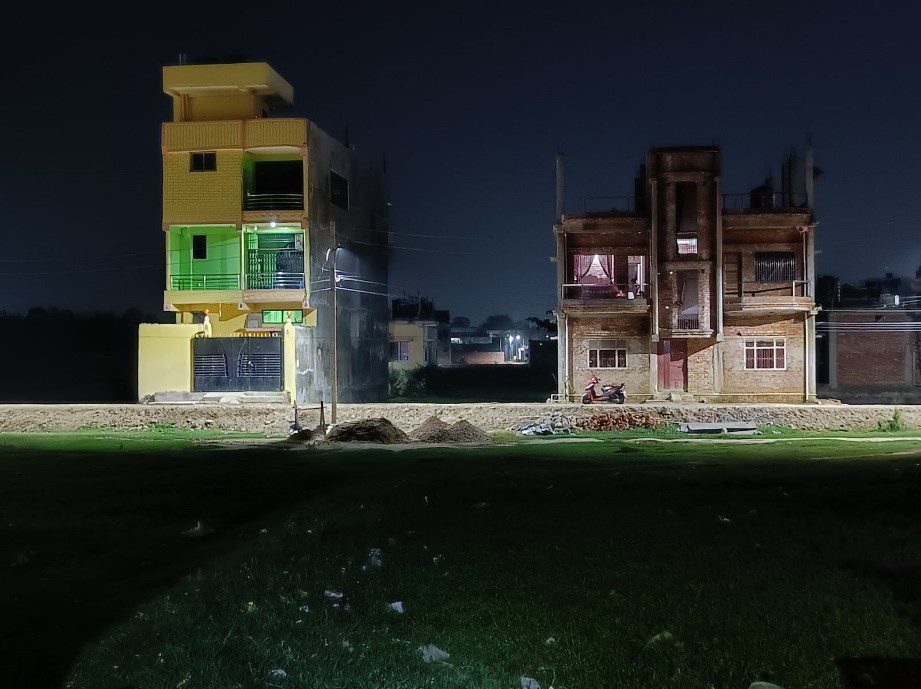
Figure 2: Raising of road elevation and houses in Birgunj in new construction
In conclusion, ensuring the sustainability of hand pumps in Birgunj relies on maintaining the suction head within practical limits throughout the year. The availability of adequate data and trend analysis of groundwater fluctuations is essential to make informed decisions for proper placement and operation of hand pumps, effectively addressing water scarcity issues in the region.
Collaborative efforts among stakeholders are vital to monitor the static water table effectively and implement sustainable water supply solutions in Birgunj.
The possible solutions can be summarized as:
- (A): FOR the suction hand pump sustainability
- Monitor the long-term groundwater table and its seasonal fluctuation to better prepare for the worst situation and take necessary mitigation steps.
- Do not over-raise the ground surface with roads and plinth levels of houses.
- Ground water should not be the source of irrigation where a huge water quantity is required. Otherwise, extraction from deeper confined aquifers should only be allowed.
- Research studies on best hand pump models, and implications of different operation parameters.
- (B): ALTERNATIVES
- A gradual shift from hand pumps to the extension of the treated piped water supply pipelines.
- Install submersible water pumps in public locations.
- Private-owned household submersible pump installations.
- Manual lift pumps should be installed in public locations for point-of-use water extraction. These lift pumps do not use the suction principle.
- Promote rainwater harvesting.
- Clustered piped water supply in a community through decentralized submersible water pumping, where piped water supply is unreachable.
- (C): PROTECTION
- Prevent contamination of the water table with household and industrial waste sewage through existing boreholes.
- Regular monitoring of the water quality extracted from aquifers.
- Protection of Chure region.
- Identification of groundwater recharge zones and creation of artificial recharge ponds at Chure recharge regions.
- Tree plantation and grassland development to slow the water surface flow and to promote recharge.
Article: Hand Pump Failure in Birgunj, Nepal: A Case Study
Thesis Study: A Study on Suction Limits and Yield of No.6 Hand Pump in Birgunj, Nepal
Article: Issues with Piped Water Supply in Birgunj Municipality
THE BELOW VIDEO GIVES A REASON FOR THE FAILURE OF HAND PUMPS IN BIRGUNJ